
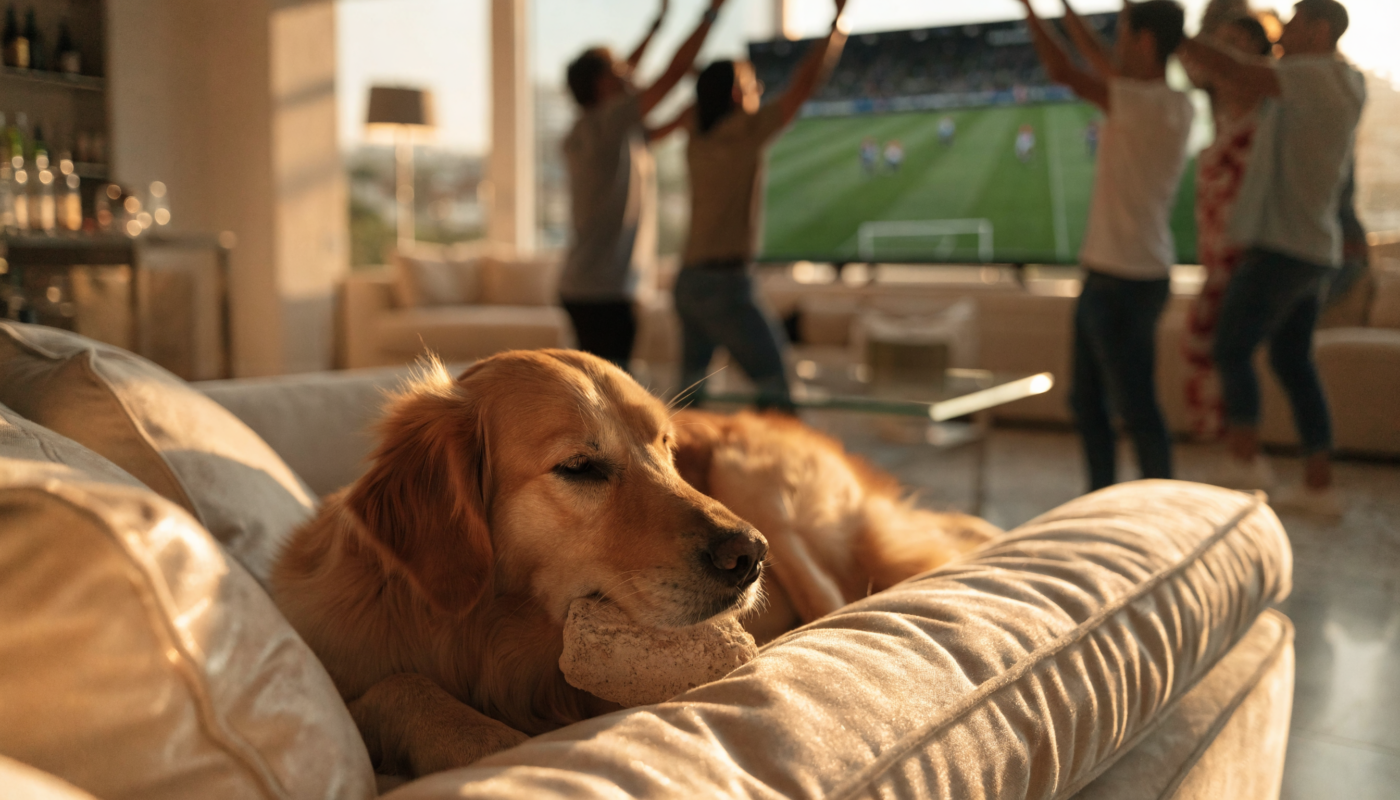
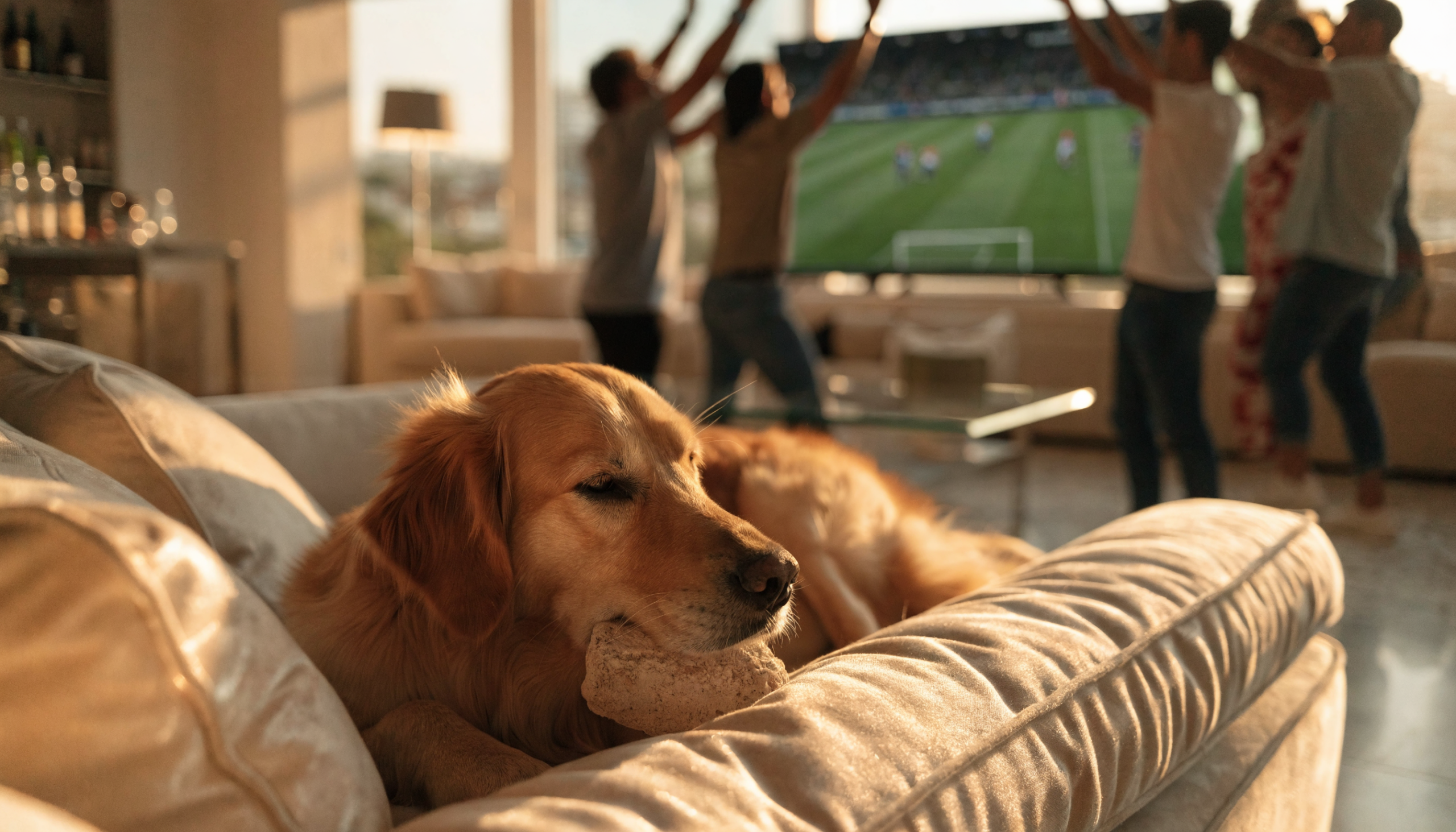
It’s the 89th minute. The striker buries it top corner. A group of football fanatics screaming, the sofa cushions airborne, people celebrating outside. And your dog? Gone. Wedged in a quiet, dark corner of the house.
Welcome to World Cup season in the UAE. From now until the final on 19 July, living rooms across the country are going to cheer several times a night. The football is nail-biting. But for your pet, those sudden roars can be extremely frightening.
Good news: noise stress is one of the most manageable problems in pet care — with a plan.
🐾 Key Takeaways (the team sheet)
- It’s more common than you think. Up to 49% of dogs show at least one sign of fear during loud noise, but only about 25% of owners realise their dog is noise-fearful (Blackwell et al., 2013).
- Sudden + unpredictable = scary. A roaring goal celebration hits harder than steady noise because your pet can’t see it coming.
- Build a Safe Zone before kickoff. A quiet interior room plus background sound is the single most effective first move.
- Comforting your pet is NOT “rewarding” fear — that’s a myth (Tufts Cummings School of Veterinary Medicine).
- Know the red-card signs. Severe panic deserves a vet conversation about calming options before the knockout rounds.
Why a Goal Celebration Rattles Your Pet
Any sudden, loud, unpredictable sound is the problem — not volume alone. A goal roar erupts from silence with no warning, so your pet’s brain can’t brace for it the way it adapts to steady traffic or an air-con hum. That unpredictability triggers the acoustic startle reflex and a flood of stress, which is exactly why a steady background noise can be soothing (AAHA, PetMD).
In a landmark UK study, around 25% of owners reported their dog was fearful of noises — yet 49% reported at least one fear behaviour when the dog actually heard loud sounds, meaning most of us under-read it (Blackwell, Bradshaw & Casey, Applied Animal Behaviour Science, 2013). A 2024 Dutch study of ~3,600 pets found 79% experienced firework-related stress, with about a third of dogs showing phobia-level fear (van Herwijnen et al., 2024). Cheering, horns and celebratory fireworks live in that same “sudden and sharp” category.
Cats get hit too — and fly under the radar. In that 2024 study, cats were affected at similar rates, but only 23% of cat owners sought advice versus 54% of dog owners. Cats tend to suffer quietly, so they need you watching even more closely.
Know the Signs: Reading Your Pet’s Body Language
Before you can help, you have to spot the stress — and it’s often subtle. Pets rarely “act dramatic”, they go still, shrink, or slip away. Learning your pet’s tells is the difference between catching the panic early and finding them hiding at full-time.
In dogs, lookout for (VCA Animal Hospitals; Tufts Cummings):
- Panting, pacing, trembling or drooling
- Hiding, cowering, freezing, or refusing to move
- Clinging to you — or bolting away and trying to escape
- Destructive behaviour, scratching at doors or windows
- Indoor accidents, loss of appetite, a tightly tucked tail
In cats, lookout for (Cats Protection; van Herwijnen et al., 2024):
- Hiding — by far the most common response (around 76% of stressed cats)
- Bolting, freezing, or pacing
- Excessive meowing, or going oddly silent
- Eating less, or toileting outside the litter tray
- Over-grooming and generally acting “out of character”
1st Half — Pre-Match Warm-Up (before kickoff)
The match is won in the warm-up. A little prep in the hours before the whistle does more than anything you’ll do mid-panic. Think of this as getting your player loose, fed, and settled before the crowd arrives.
- Burn the energy early. A good long walk or play session in the cooler part of the day leaves your pet calmer and more likely to sleep through the noise.
- Feed before, not during. A frightened pet often won’t eat. Serve dinner before kickoff so an upset tummy isn’t added to the stress.
- Toilet break before the crowd. Last walk out before guests and noise arrive, so nobody’s forced outside into the chaos later.
- Check the ID kit. A spooked pet is an escape risk. Confirm the collar tag and microchip details are up to date — Dubai-based vets flag this every celebration season (Khaleej Times).
- Start early if it’s serious. True desensitisation and counter-conditioning work, but they take weeks of daily practice — not one afternoon (Riemer, 2020). If your pet already panics, begin gently now, well before the knockouts.
Build the Safe Zone (your defensive setup)
A designated safe haven is the strongest, most evidence-backed move you can make — for both dogs and cats. It’s first-line advice from vets worldwide (VCA, RSPCA, Cats Protection). The idea is simple: give your pet one room where the world feels small, predictable, and theirs.
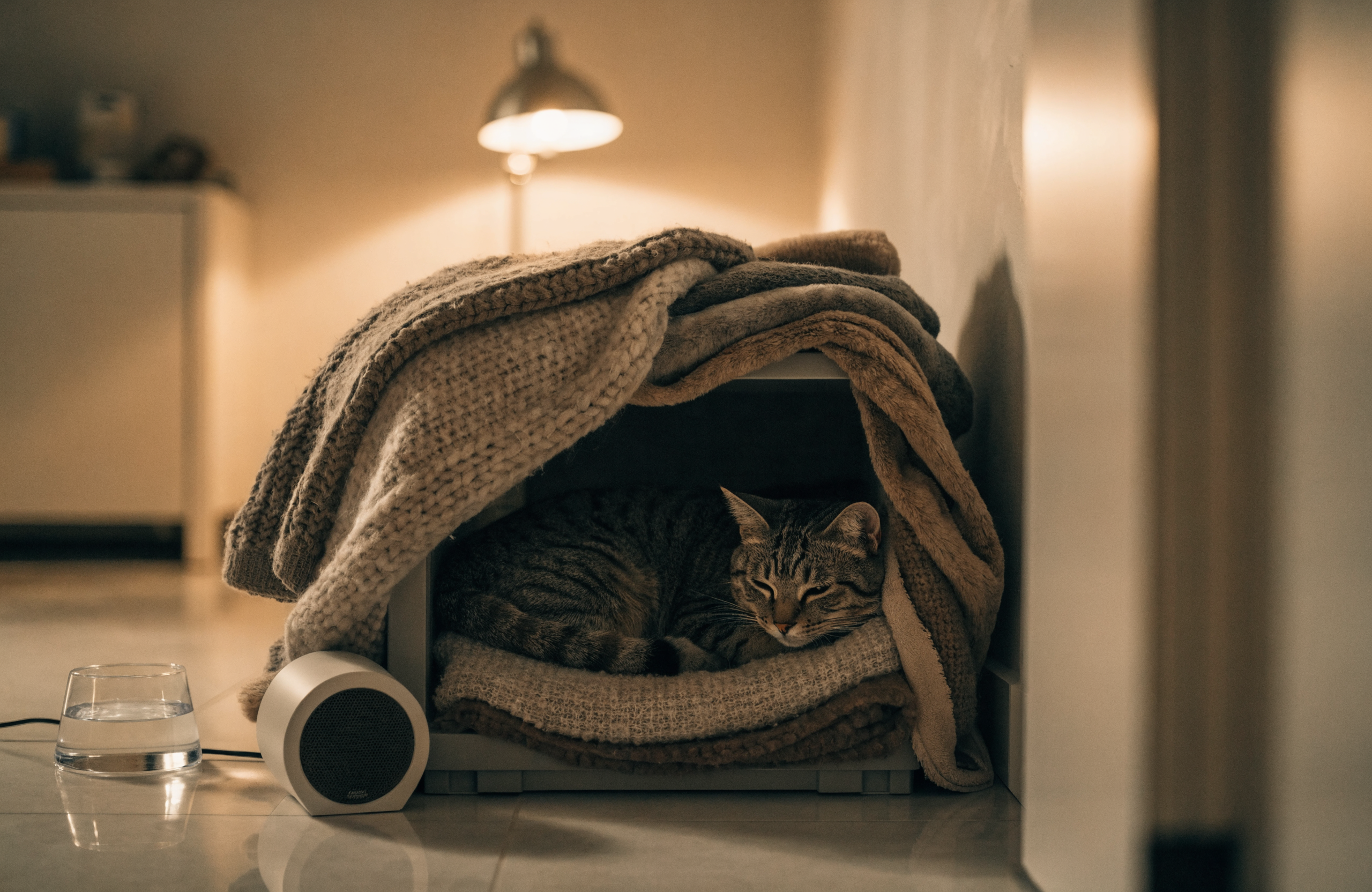
How to set it up:
- Pick an interior room away from windows and the main TV — a bedroom, walk-in wardrobe, or quiet corner works beautifully.
- Make it a den. A covered crate, a blanket over a side table, or your cat’s favourite cardboard box. Cover it with familiar-smelling blankets.
- Add their comfort items — a worn t-shirt of yours, a favourite toy, a long-lasting chew to redirect nervous energy.
- Mask the roar with steady sound. Leave a fan, white-noise app, calm music, or even a second TV on low. Predictable background sound blunts the shock of sudden cheering (AAHA, and Dubai vets recommend exactly this for celebrations).
- Open the door, don’t lock it. The safe zone should be a choice. Let your pet come and go — being trapped makes panic worse.
2nd Half — Half-Time Check-Ins (during the match)
When the noise is live, your job changes from builder to coach: calm presence, steady hands, no drama. What you do in these moments genuinely matters — and a couple of old myths can lead you astray.
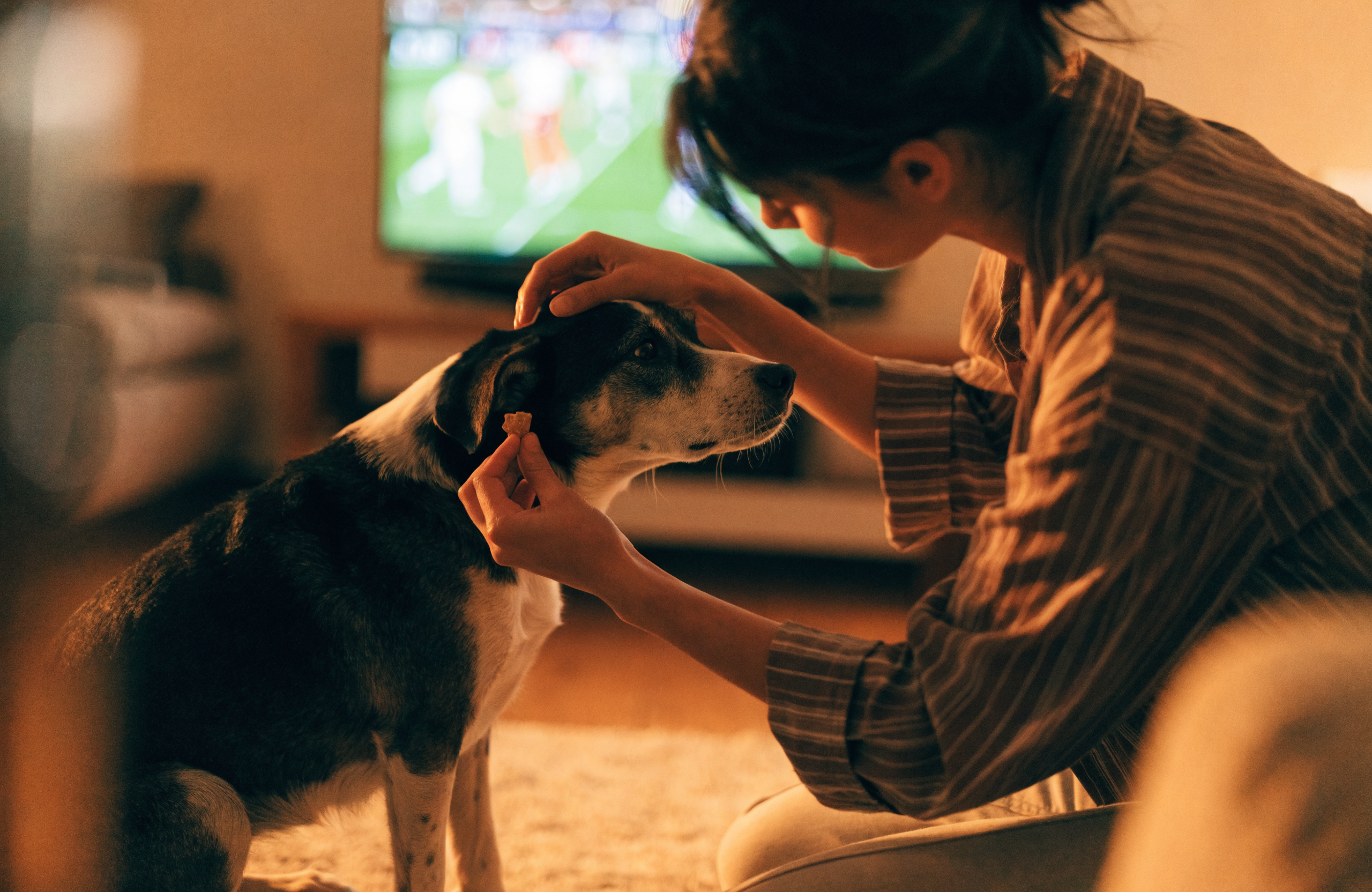
- Yes, you can comfort them. The “don’t cuddle your scared dog or you’ll reinforce the fear” line is a myth. Fear is an emotion, not a trick — reassuring a pet that seeks you out won’t make it worse, and your calm presence can help (Tufts Cummings School). The trick is to stay relaxed yourself — don’t fuss frantically, which signals there’s something to fear.
- Never punish a frightened pet. Scolding a shaking dog only deepens the fear long-term (RSPCA).
- Don’t drag them out. Forcing a hiding cat into the open, or pushing treats on a panicking dog, backfires — let them retreat and ride it out (Cats Protection; VCA).
- Try a snug pressure wrap. A properly fitted body wrap (e.g. a ThunderShirt) produced a smaller heart-rate spike in anxious dogs in one study — a modest, fit-dependent helper, not a cure (Pekkin et al., 2014).
- Consider pheromones. Adaptil for dogs and Feliway for cats have mixed-but-reasonable evidence, low cost, and minimal downside — a fair adjunct to the safe zone, not a magic fix (Veterinary Evidence reviews).
Full Time — The Final Whistle (winding down)
When the match ends and the guests file out, ease your pet back to normal rather than flipping a switch. Keep your own energy low and let the house settle. Quietly reward the calm — a treat, a gentle word, a favourite toy — so the evening ends on a good note.
Then take 30 seconds to be your own analyst: what worked? Did the white noise help? Did they settle faster in the bedroom than the wardrobe? Jot it down. With matches every few nights through the knockouts, you’re effectively running a mini-season — and each game makes your game plan sharper for the next one.
Extra Time — When to Call in the Pros (the red-card signs)
Some pets need more than a comfy den, and that’s nothing to feel bad about. Book a vet chat if your pet shows panic-level signs — relentless trembling, destructive escape attempts, refusing food for long stretches, or distress that doesn’t ease once the noise stops. For severe noise phobia, vets can discuss situational anti-anxiety options, which rate among the most effective approaches owners report (Riemer, 2020). Start that conversation before the final rounds, not at kickoff.
And here’s the home-ground advantage for UAE pet parents: keeping your pet’s routine calm and low-stress through a noisy season is exactly our world. Pets in the City brings professional grooming to your door — no stressful car ride, no unfamiliar salon, no waiting room full of barking. A relaxed, well-cared-for pet copes with the chaos far better. Keep their routine steady, and let the football be the only thing screaming this summer. 🏆🐾
Frequently Asked Questions
Does comforting my dog during the noise reinforce its fear?
No. This is a well-debunked myth. Fear is an emotion, not a learned behaviour you can accidentally “reward,” so reassuring a pet that comes to you for comfort won’t make the fear worse — and can help. Just stay calm yourself rather than fussing anxiously (Tufts Cummings School of Veterinary Medicine).
Should I leave the TV or music on for my pet?
Yes. Steady background sound — a second TV on low, a fan, white noise, or calm music — helps mask the sudden spikes of cheering and horns, making the soundscape more predictable and less startling (AAHA; PetMD). It’s a top tip from Dubai vets for celebration nights.
My cat just hides the whole evening — should I pull it out?
No. Hiding is a normal, healthy coping strategy for cats. Forcing a frightened cat into the open tends to prolong the stress. Make sure its hiding spot is safe and accessible, and let it emerge in its own time (Cats Protection).
Do calming wraps and pheromone diffusers actually work?
They can help as part of a wider plan, but they’re not cures. A snugly fitted pressure wrap modestly reduced heart-rate spikes in one study, and pheromones (Adaptil, Feliway) have mixed-but-reasonable evidence with little downside. Use them alongside a safe zone, not instead of one.
When should I see a vet about my pet’s noise anxiety?
If your pet shows panic-level distress — constant trembling, trying to escape, refusing food, or not settling after the noise ends — talk to your vet. They can discuss situational anti-anxiety medication and a desensitisation plan, ideally started well before a season of loud nights (Riemer, 2020; Tufts Cummings School).
Sources: Blackwell, Bradshaw & Casey, Applied Animal Behaviour Science (2013); van Herwijnen et al., Veterinary and Animal Science (2024); Riemer, Journal of Veterinary Behavior (2020); Pekkin et al., Journal of Veterinary Behavior (2014); VCA Animal Hospitals; Tufts Cummings School of Veterinary Medicine; RSPCA; Cats Protection; AAHA; PetMD; Veterinary Evidence; Khaleej Times. This article is general guidance, not a substitute for veterinary advice — consult your vet about your individual pet.

Curated by Diya Sampat
