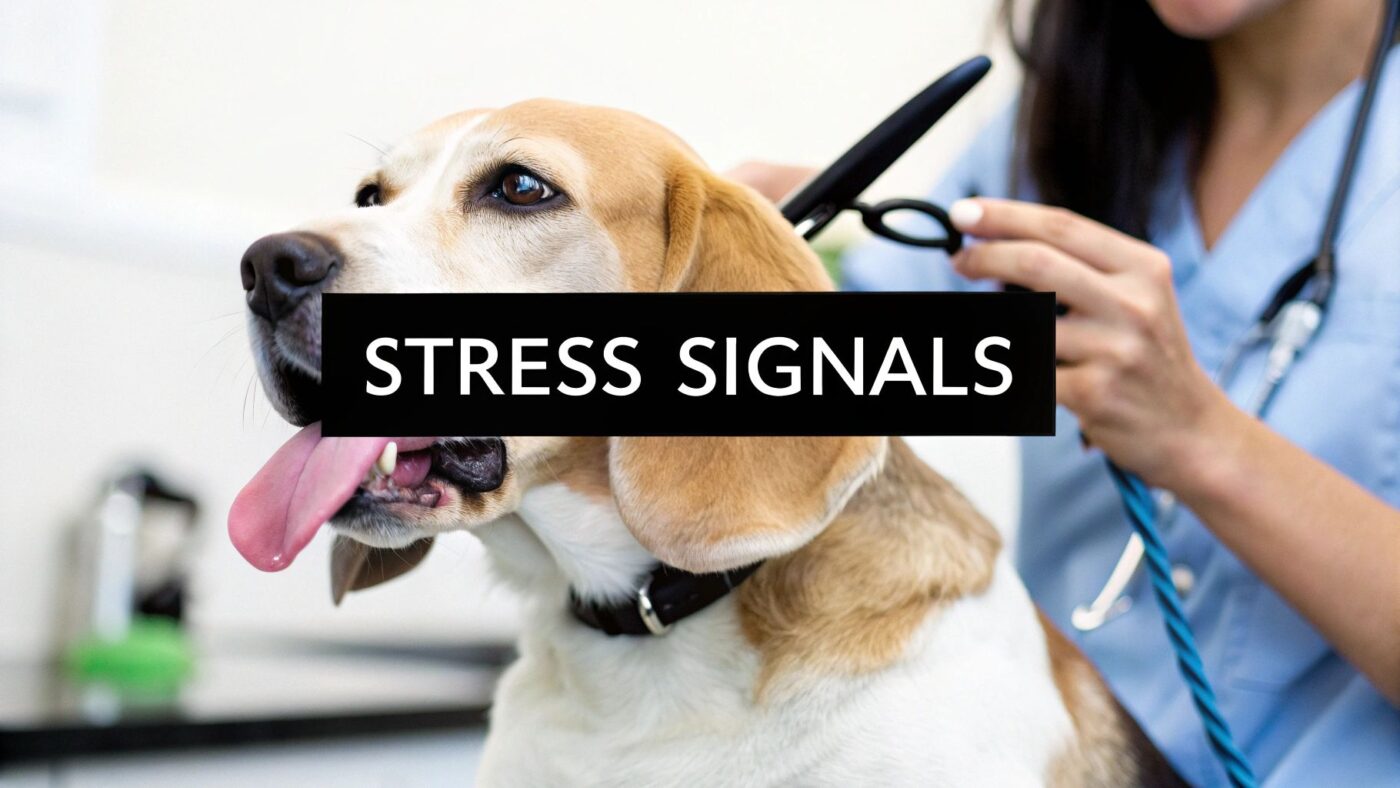
Let's be honest, grooming can be a lot for a dog to handle. We want it to be a positive experience for their health and well-being, but sometimes, subtle signs like a quick lip lick or showing the whites of their eyes (often called whale eye) are their way of whispering, "I'm not so sure about this."
Learning to spot these little cues is the first real step in turning a potentially nerve-wracking situation into a calm, trusting moment between you, your dog, and your groomer.
Why Understanding Dog Stress Signals Matters
If you're a devoted dog owner here in Dubai, you know your furry friend’s well-being is everything. While grooming is essential for their health, it can be a total sensory overload for some pups. Think about it: the buzz of clippers, the strange sensation of the bath, and being handled in new ways can easily trigger anxiety.
Your dog can't just come out and say, "Hey, this is making me nervous!" Instead, they use a whole silent language of body signals to communicate how they're feeling. This guide is all about helping you become fluent in that language. We'll walk you through the most common stress signals dogs show during grooming—from the easy-to-miss ones to the more obvious signs that they need a break.
Spotting these cues isn’t about being critical of your dog; it's about truly listening to what they’re trying to tell you. Since 2011, we've seen firsthand how tuning into these signals, especially with a patient and compassionate groomer, can completely change the game. Our whole approach with at-home mobile grooming is built on this idea—creating a peaceful, familiar space right in your own home, whether you're in Jumeirah, Mirdif, or Downtown Dubai, to cut down on stress from the get-go.
Our goal is simple: to help you become your dog's best advocate, making sure every grooming session is as safe and comfortable as possible. Understanding their silent messages is the most powerful tool you have.
This kind of careful observation is a huge part of being a responsible pet parent. When you learn to see the world from their point of view, you don't just make grooming better—you strengthen your entire relationship. For more ideas on building a safe and happy world for your pet, check out our useful pet care tips to keep them safe and healthy. It's all connected.
Your Guide to Common Canine Stress Signals
Ever heard of a dog's "stress ladder"? It’s a great way to think about how they communicate. Dogs rarely just jump straight to a growl or a snap. Instead, they start with quiet, subtle whispers of discomfort. If we miss those early hints, their signals get louder and more obvious as they "climb the ladder" of stress.
Our professional mobile grooming team, who you’ll see all over Dubai from Jumeirah to Dubai Marina, are experts in listening for these first whispers. By catching these signs early, we can step in and prevent stress from building, making sure the whole experience stays calm and positive. This guide will walk you through the whole spectrum of signals, from the quietest yawn to an urgent plea for help.
The First Rungs of the Ladder: Subtle Signals
The earliest signs of stress are incredibly easy to miss because they often look like everyday behaviours. Vets and behaviourists call them displacement activities—think of them as a dog's version of nervous habits, like a person fiddling with their hair when they're anxious. Context is everything here.
Here are a few of the most common ones we see:
- Lip or Nose Licking: This isn’t about being hungry. A quick, darting flick of the tongue to the lips or nose is a classic, "I'm a little unsure about this" signal.
- Yawning When Not Tired: A huge yawn right in the middle of a nail trim isn't boredom. It's actually a common way for dogs to release a little bit of tension when they start to feel overwhelmed.
- 'Shake Off' When Not Wet: Have you ever seen a dog do a full-body shudder, just like they’re shaking off water, but they're completely dry? They're literally trying to "shake off" a stressful moment that just passed.
Picking up on these early signs is one of the most important skills a dog owner can develop. If you're keen to learn more about helping your dog feel confident in a bustling city like Dubai, check out our guide on the number one skill every Dubai dog needs.
This simple flowchart shows how it all connects: when we understand their signals, we can reduce their stress, which leads directly to a happier, more positive grooming session.
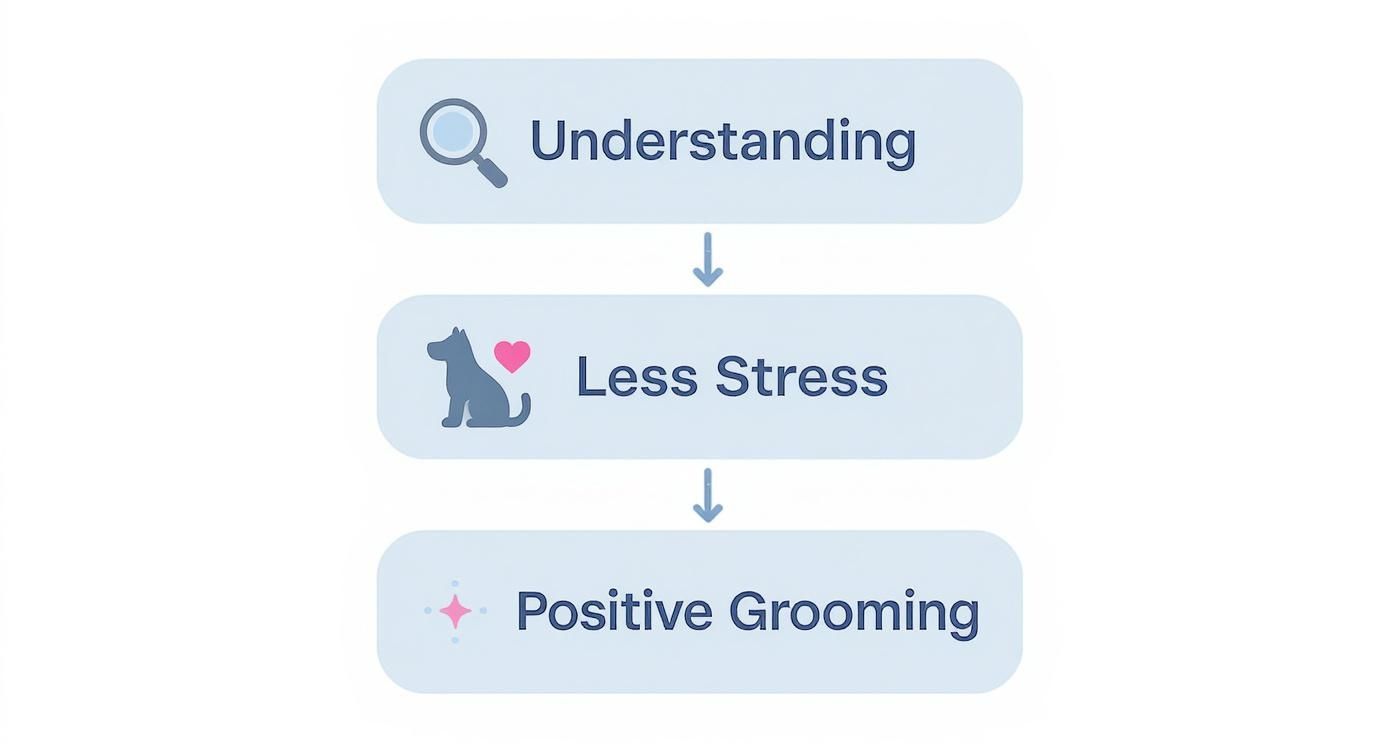
It really all boils down to this: compassionate grooming starts with paying close attention. That's how you build a real cycle of trust and comfort.
Mid-Level Warnings: Signs of Increasing Discomfort
So, what happens if those subtle signals are missed? Your dog will turn up the volume. These next-level signs are much clearer requests to please stop what's happening. Their stress is building, and they are now actively trying to get out of the situation.
Think of it this way:
A dog's body language is their most honest form of communication. When they show signs of stress, they are not misbehaving; they are asking for help and understanding.
It’s actually quite alarming how often these signs get overlooked. A 2023 UK study was a real eye-opener, revealing that fewer than half of owners could correctly identify common stress signals like a stiff body or a tucked tail. Even fewer recognised the more subtle cues like lip licks or whale eye. This shows a huge gap between what our dogs are desperately trying to tell us and what we're actually hearing.
Canine Stress Signals: What to Look For
To help you become a pro at reading your dog, we've put together this quick reference table. It breaks down what to look for, what your dog is likely feeling, and how seriously you should take each signal.
| Stress Signal | What It Looks Like | What Your Dog Is Saying | Stress Level |
|---|---|---|---|
| Lip/Nose Lick | A quick, repetitive flick of the tongue. | "I'm feeling a bit uncertain or anxious." | Low |
| Yawning | A big yawn when not sleepy. | "This situation is making me uncomfortable." | Low |
| Whale Eye | Showing the whites of their eyes. | "I'm worried and watching closely." | Medium |
| Tucked Tail | Tail is held low or tucked between the legs. | "I'm scared and trying to be invisible." | Medium-High |
| Low Body Posture | Crouching, lowered head, making themselves small. | "Please don't hurt me; I am no threat." | High |
| Panting | Rapid, shallow breaths when not hot or tired. | "I'm very stressed out right now." | High |
| Trembling | Involuntary shaking or shivering. | "I am terrified and can't control my fear." | Urgent |
Keep this table in mind during any new or potentially stressful situation, not just grooming. It’s your cheat sheet for understanding your dog's inner world.
Obvious Signs of Distress: Time to Stop
If a dog's anxiety keeps climbing, their body language becomes impossible to miss. These aren't whispers anymore; they're shouts for help. Seeing any of these signs means the grooming session must pause immediately. Pushing through will only shatter trust and can create a deep-seated fear of grooming for years to come.
- Tucked Tail: A tail clamped tightly between the legs is the universal sign for fear.
- Trembling or Shaking: This isn't just a little nervousness. It's an involuntary physical reaction to extreme anxiety.
- Low Body Posture: The dog might be cowering, keeping their head low, and trying to shrink themselves to seem as small as possible.
- Panting Heavily: If it’s not hot out and they haven’t just been for a run, fast, shallow panting is a massive red flag for high stress.
Learning to recognise this full range of communication is the cornerstone of kind and effective care. It turns grooming from something that is done to a dog into a partnership built on a foundation of trust and respect.
Decoding Whale Eyes and Lip Licks
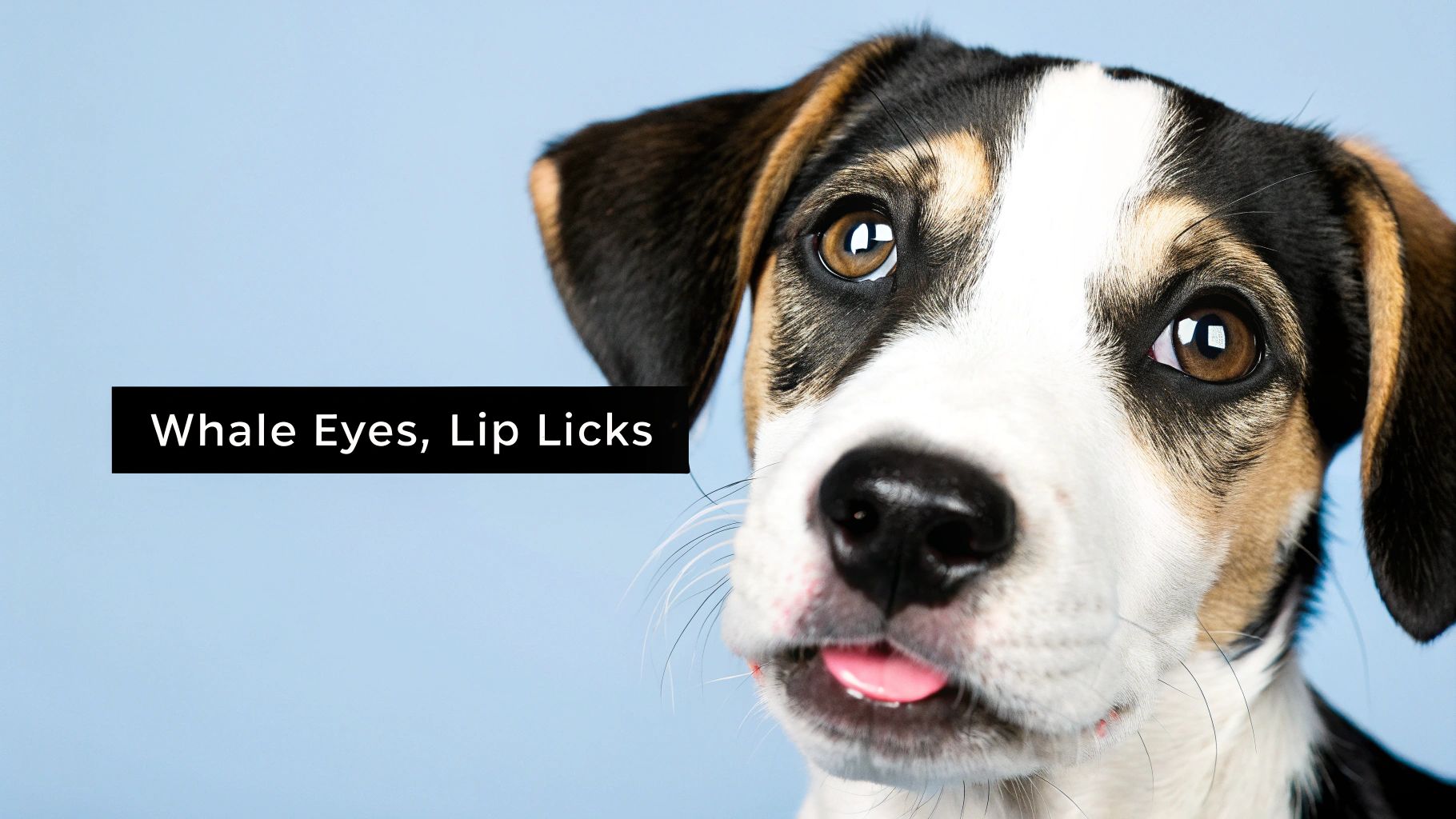
Alright, let's zoom in on two of the most common—and most missed—signals a dog gives during a groom: the subtle whale eye and the quick lip lick. Think of these as your dog's quietest, most polite ways of asking for a little space.
Just learning to spot these two signals will make a world of difference in how you support your pup. Our mobile grooming team, which covers everywhere from Downtown Dubai to Mirdif, sees these cues as our essential roadmap for keeping a groom calm and positive.
Understanding the Whale Eye
"Whale eye" is a term used to describe a very specific look. It’s when a dog turns their head away from something that's making them uneasy, but they keep their eyes locked on it. You'll see the whites of their eyes (the sclera) pop out in a little crescent moon shape.
This isn't your dog being stubborn or defiant. It's a clear sign of anxiety or feeling conflicted. Your dog is basically saying, "I'm really worried about what's happening, and I'm watching you, but I really don't want any trouble." It’s a huge indicator that their stress level is on the rise.
Think of it as your dog trying to de-escalate the situation. They're avoiding direct, confrontational eye contact (a big deal in the dog world) while still keeping a very close watch on the potential threat.
Spotting a whale eye is your cue to act. It's a polite request to please pause what you're doing, whether that's trimming nails or brushing a tangled spot, and take a moment. Pushing through when you see this look is a surefire way to make their anxiety climb even higher.
The Meaning Behind Lip Licks
In the same way, a quick little lip lick that has nothing to do with food isn't about hunger. When you see a dog flick their tongue out to their lips or nose very quickly, it’s a classic appeasement gesture. We often call these "calming signals."
It's a lot like how a person might nervously bite their lip or fiddle with their hands when they feel awkward. A dog’s lip lick does the same job. It’s a signal they use to try and calm themselves down, and to let everyone around them know they mean no harm.
You’ll likely see this pop up during grooming when:
- A new or noisy tool, like clippers, makes an appearance.
- Someone is handling a sensitive spot like paws or ears.
- They feel a bit too constrained or held too tightly on the table.
This tiny action is packed with information. It’s your dog communicating their discomfort and asking for a bit of reassurance. When our groomers see this during an at-home service, we know it's time to slow our roll, offer a soft word, or change how we're holding them so they feel secure again.
These quiet signals are your dog's first line of defence. By learning to read whale eyes and lip licks, you become a better advocate for your dog, making sure every groom is built on a foundation of trust, not just tolerance.
How to Respond When You See Stress Signals
So, you've spotted a whale eye or a quick lip lick. That's a huge first step. But what you do in that exact moment is what really counts for your dog. Your reaction can either tell them, "I hear you, we'll take a break," or it can accidentally crank up their anxiety. Being that calm, supportive presence is everything.
This isn't just a side note; it's the heart of our entire mobile grooming philosophy. We've learned that putting a dog's emotional well-being first—even if it means pausing the haircut—builds an incredible partnership. It teaches them that grooming isn't something to be dreaded, but a predictable, safe experience. That trust makes every future session so much smoother for everyone.
What You Should Do
When you see a sign of stress, your mantra should be: pause and support. You’re not giving in; you’re showing your dog that you’re a trustworthy leader who listens.
- Immediately Pause the Action: Are you about to clip a nail and see a lip lick? Stop. Brushing a tricky mat and your dog yawns? Put the brush down for a second. This simple pause sends a powerful message: "I get it. Your signal worked."
- Give Them Space: Sometimes, all they need is a little breathing room. Gently release your hold or take a small step back. Let them have a moment to shake it off, sniff the floor, and just reset.
- Use a Calm Voice: Soft, reassuring tones are your best friend here. Steer clear of that high-pitched, frantic "It's okay, you're okay!" chatter, which can sound more like you’re praising them for being nervous. A simple, low "good boy" or even just a moment of quiet connection works wonders.
What You Should Avoid
Knowing what not to do is just as critical. A lot of well-meaning reactions can actually make a dog's fear worse and chip away at the trust you're trying to build.
- Don't Push Through: Forcing a dog to "just get over it" when they're clearly uncomfortable is a recipe for disaster. It teaches them that their polite warnings don't work, which is when they might feel they have no choice but to escalate to a growl or even a snap.
- Don't Punish a Growl: A growl isn't aggression—it's communication. Think of it as your dog’s last-ditch, polite effort to say, "I am really not okay with this, please stop." Scolding a growl only teaches them to skip the warning next time, which is far more dangerous.
- Don't Coddle Excessively: While you definitely want to be reassuring, over-the-top, dramatic comforting can backfire. It can signal to your dog that, yes, there really is something to be terrified of. A calm, matter-of-fact pause is far more effective.
The bottom line is pretty simple: respect what your dog is trying to tell you. When they "talk" with their body, listening builds a bond that turns our dog grooming in Dubai from just a service into a genuinely compassionate experience.
Beyond these in-the-moment responses, you might be curious about long-term ways to help your dog feel more secure. For example, there are many effective natural remedies for dogs that can promote a sense of calm. As with anything, though, it's always best to have a chat with your vet first.
Our Compassionate Approach to At-Home Grooming
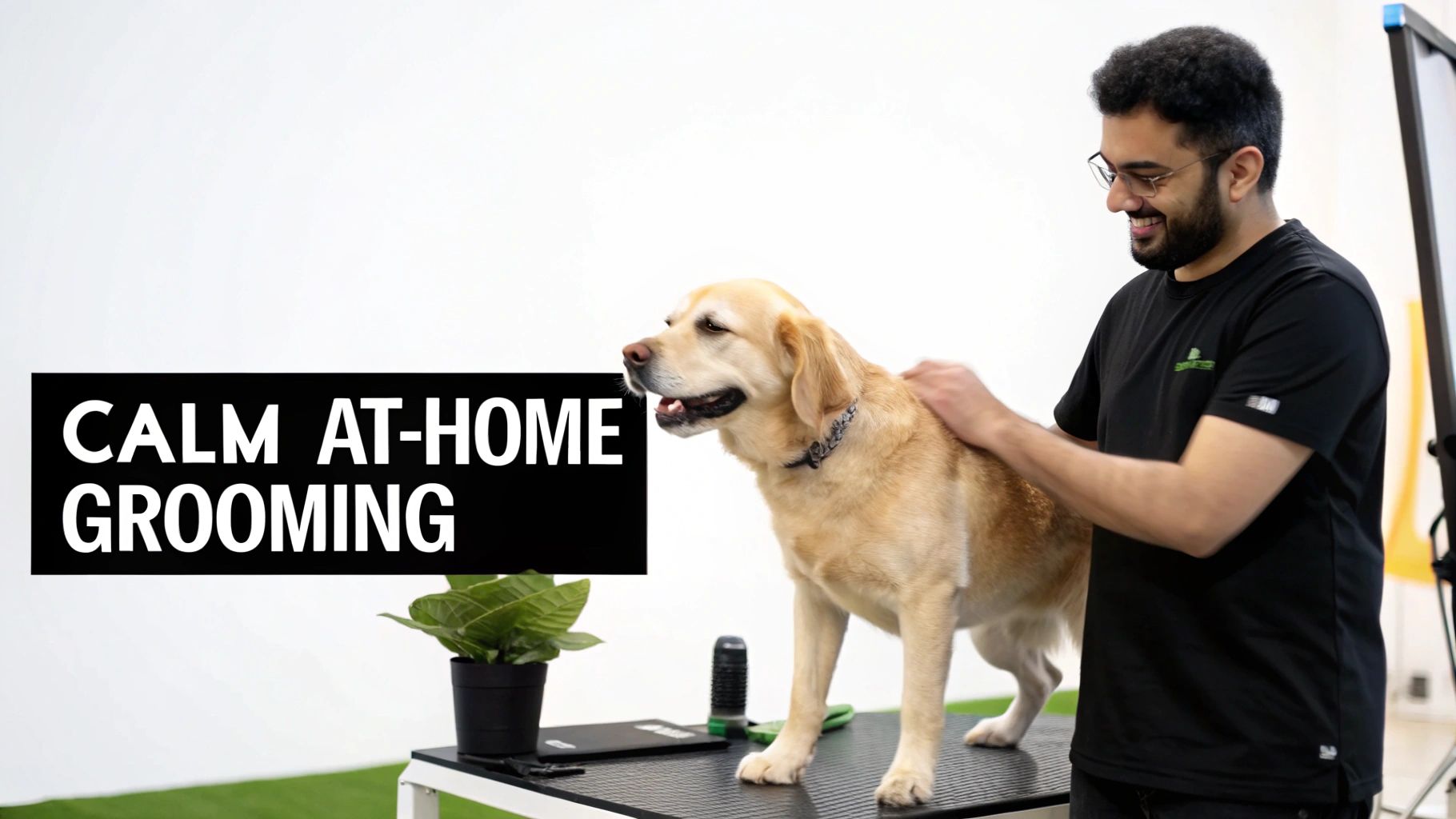
When we started our mobile grooming service here in Dubai back in 2011, we had one goal in mind: to create a grooming experience that was actually enjoyable for pets, especially those who dread the traditional salon. For us, noticing the subtle signs of stress like whale eyes or quick lip licks isn't just a small part of the job—it’s everything. It’s the core of how we care for your best friend.
Our entire process is built around getting rid of those common anxiety triggers right from the start. By bringing a fully-equipped, professional salon to your home, whether you're in Arabian Ranches or Jumeirah, we skip the stressful car rides and the chaos of a busy waiting room. Your dog gets to stay on their own turf, which makes a world of difference and sets a much calmer tone for the whole appointment.
Personalised Care at Your Doorstep
We know every dog is different, with their own personality, quirks, and sensitivities. That’s why a one-size-fits-all grooming routine just doesn't cut it. Our groomers are experts in cooperative care and fear-free handling, which is a professional way of saying we know how to listen to your dog.
It all starts with building trust. We take our time, letting them sniff the tools before we use them, opting for quieter equipment, and showering them with praise and treats for being brave. It’s not about just getting the job done; it’s about building a respectful partnership with your dog.
We see ourselves as your partners in your pet’s well-being. Our groomers are trained to read the subtle language of stress, ensuring we can adjust our methods in real-time to maintain your dog’s comfort and confidence.
We tailor every grooming plan specifically to your dog's needs. That might mean we:
- Take Frequent Breaks: If we see a dog is getting overwhelmed, we’ll pause and let them shake it off for a minute.
- Adjust Handling Techniques: We use gentle, supportive holds that make a dog feel safe and secure, not pinned down.
- Work at Your Dog's Pace: A positive experience is always more important than speed. We’re thorough, but we never rush.
Our mission is to turn grooming from a stressful ordeal into a positive, even pleasant, part of your dog’s routine. Our mobile pet grooming services are all about delivering five-star care with a heaping dose of convenience and compassion.
If you’re looking to build on this positive foundation at home, learning the basics can make a huge difference. For some great, practical advice, check out this guide on 8 quick steps for a happy pup during at-home grooming. By working together, we can make sure every bath and trim contributes to your dog’s overall happiness and well-being.
Your Grooming Anxiety Questions, Answered
We get a lot of questions from caring pet owners across Dubai who are worried about their dog's stress during grooming. Let's walk through some of the most common concerns and give you the clear, expert answers you need to feel confident about your dog's care.
"My Dog Hates Grooming. Can He Still Be Professionally Groomed?"
Yes, absolutely! Just because your dog has a tough time with grooming doesn’t mean they can't be groomed professionally. It simply means we need to take a different, more patient approach. This is exactly where our mobile grooming service shines.
By coming to your home, we instantly eliminate two major stress-inducers: the car ride and the chaotic, unfamiliar salon. Our groomers are experts in gentle techniques like desensitisation (slowly getting them used to something new). We'll introduce a pair of clippers slowly, pairing it with lots of praise and tasty treats, helping your dog build a new, positive association. It’s all about earning their trust, never forcing the process. Many dogs who panic in a traditional salon setting do wonderfully with our calm, one-on-one sessions right in their own driveway.
"Should I Give My Dog a Calming Supplement Before His Grooming Appointment?"
This is a great question, and the answer is firm: never give your dog any medication or supplement without speaking to your veterinarian first. Only a vet can properly evaluate your dog's health and anxiety to determine what, if anything, is safe and appropriate. Trying to medicate on your own can be risky and might even cover up a medical issue that’s causing the behaviour.
Often, our specialised handling techniques are more than enough to help a dog relax. For those with more significant anxiety, we see your vet as a partner in your dog's care. Together, we can create a plan that combines their medical advice with our gentle grooming methods to ensure your dog feels as safe and comfortable as possible.
"I'm Worried About Stressing My Dog Out. Is It Better If I Just Groom Him Myself?"
It’s completely understandable to want to handle it yourself, but DIY grooming can sometimes backfire. An accidental nick from the clippers or a painful tug on a mat can create a deep-seated fear of being handled, making every future grooming session even harder.
Our professional groomers have trained eyes. We can catch the super subtle signs of stress you might miss—a fleeting whale eye or a quick lip lick—and we know how to respond immediately. We’re equipped to handle tricky matted fur or sensitive areas safely and efficiently. Our mobile service in Dubai truly offers the best of both worlds: your dog gets to stay in their comfort zone, while you get the peace of mind that comes with professional, expert care.
At Pets In The City, we’re committed to making grooming a compassionate and positive part of your dog's life. Experience the convenience and care of at-home pet grooming by booking our mobile service.
