

As a caring pet owner in Dubai, finding those little white flakes on your dog's fur or their favourite snoozing spot can be worrying. It’s easy to blame the dry air, but often, flaky skin is an external clue to an internal issue, frequently pointing straight to your dog's gut health.
Think of it as the gut-skin axis—a direct line of communication between their digestive system and their skin. What’s happening on the inside has a huge impact on your dog's well-being and how their skin looks and feels on the outside.
Why Your Dog’s Flaky Skin is More Than Just a "Dubai Thing"
From Jumeirah to Mirdif, seeing a dog with flaky skin isn't uncommon. While our desert climate and round-the-clock AC certainly play a part, persistent flakiness is your dog's way of telling you something deeper is going on. Their skin is a fantastic barometer for their overall health, and those flakes are often the first sign that an internal balance is off.
We're going to dive into what those flakes really mean, with a special look at that all-important gut-skin connection. Together, we'll explore:
- The surprising link between your dog’s tummy and their skin health.
- The most common triggers for flaky skin we see right here in Dubai.
- How vets get to the bottom of skin problems for a proper diagnosis.
- Practical nutrition and grooming tips to restore your dog's comfort and healthy shine.
Understanding this connection is the first step to giving your dog lasting relief. Many common health problems in Dubai are linked, so learning about this piece of the puzzle is crucial for their well-being. You can learn more in our guide on the top 5 pet health issues we see in Dubai and how to prevent them.
Common Causes of Flaky Skin in Dubai Dogs at a Glance
Before we dive deeper, let's look at the usual suspects. This table gives you a quick snapshot of what might be causing your dog's flaky skin.
| Cause | Key Signs | Common in Dubai? |
|---|---|---|
| Environmental Allergies | Itching, redness, ear infections, and flaky patches, especially on the belly and paws. | Very Common. Dust mites and local pollens are year-round irritants. |
| Dietary Sensitivities | Chronic flaky skin, digestive upset (gas or loose stools), and excessive scratching. | Common. Reactions to proteins like chicken or beef are frequent. |
| Dry Climate & AC | Generalised dry, dull coat with fine, white flakes, but often without intense itching. | Extremely Common. Constant air conditioning strips moisture from the air and skin. |
| Parasites (e.g., Mites) | Intense itching, crusty sores, hair loss, and scaly patches. | Moderately Common. Highly contagious and requires prompt veterinary care. |
| Fungal/Bacterial Infections | Oily or crusty skin, a musty odour, redness, and circular patches of hair loss. | Common. The warm climate can encourage yeast and bacterial overgrowth. |
This chart is a great starting point, but it's important to remember these issues can sometimes overlap. If you notice these signs, it's essential to see a vet for a proper diagnosis.
The Gut-Skin Axis And Your Dog’s Skin
It’s easy to think of your dog’s stomach and skin as two separate worlds. Yet they’re actually in constant conversation through what vets call the gut-skin axis. Understanding this link often holds the key to resolving stubborn skin troubles, especially that flaky, persistent dandruff.
Think of your dog’s gut as garden soil. When the soil is nutrient-rich and well-balanced, flowers bloom and leaves stay vibrant. In this analogy, the skin represents those flowers. If the soil is depleted or off-kilter, the blooms begin to wilt. In the same way, an upset gut microbiome will soon show its distress on the skin’s surface.
How An Unhappy Gut Leads To Flaky Skin
A healthy gut lining functions like a finely-tuned filter. It lets vital nutrients into the bloodstream while keeping toxins, allergens, and undigested food particles safely inside the digestive tract. Here’s why this matters for your dog's care:
- It supports a strong immune barrier—an estimated 70% of a dog’s immune system lives in the gut.
- Beneficial bacteria help maintain that barrier and regulate inflammation.
- A balanced microbiome is central to your dog's overall health and comfort.
But when that balance is knocked off—whether from a poor diet, stress, or medication—the lining can develop tiny weaknesses. Vets call this “leaky gut.” Harmful particles can then escape into the bloodstream, triggering an immune reaction that often radiates outwards to the skin. The result is discomfort and visible signs like:
- Redness and irritation
- Intense itching and scratching
- Dry, flaky skin or dandruff
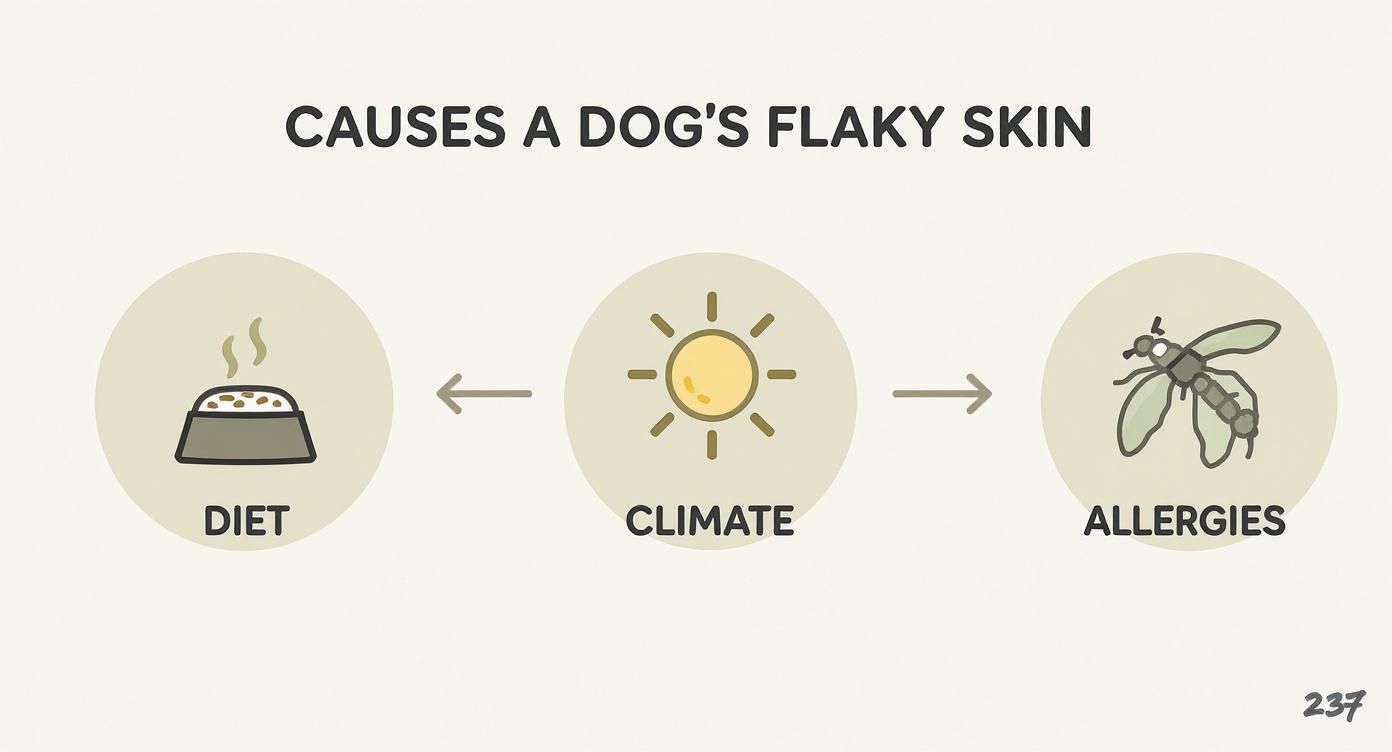
This illustration shows how diet, climate, and allergies all contribute to your dog’s skin health—and why a single quick fix rarely solves the whole puzzle.
What Disrupts Your Dog’s Gut Health?
In Dubai’s unique environment, several everyday factors can unsettle that delicate gut balance:
- Antibiotics: Effective against infections but can also wipe out good bacteria.
- Diet: Processed, low-quality diets or foods your dog is sensitive to.
- Stress: Changes from travel, extreme temperatures, or shifts in routine.
An internal imbalance explains why specialty shampoos or creams may only offer short-lived relief. They calm the surface but don’t tackle the deep-seated inflammation originating in the gut.
By focusing on the gut-skin axis, you move from simply treating flakes to nourishing your dog's health from the inside out. A vet’s insights are invaluable for this. For a comprehensive look at this crucial connection, consider reading a complete guide to dog gut health.
Common Causes of Flaky Skin in Dubai Dogs
While a stressed gut can be the hidden culprit behind your dog's flaky skin, we can't ignore the world they live in—especially here in Dubai. The local environment can either directly affect the skin or put stress on your dog's system, which circles right back to disrupting their gut health.
Let's walk through the most common triggers we see every day, both in veterinary clinics and during our at-home dog grooming sessions across the city.
The Dry Climate and Constant Air Conditioning
Dubai is a desert, which means the air outside is naturally low in humidity. But the real moisture-zapper is often indoors. Our reliance on powerful, round-the-clock air conditioning creates an environment that’s just as dry as the desert outside.
This relentless dry air essentially pulls moisture straight from your dog's skin and coat. It strips away the skin's natural protective oils, leaving it dehydrated and vulnerable. The result? Those tell-tale fine, white flakes, a dull-looking coat, and often, mild itchiness. It's a classic Dubai problem, from high-rise apartments in Dubai Marina to villas in Mirdif.
Environmental Allergies: Dust Mites and Pollens
Allergies are a huge factor when it comes to persistent skin problems. Here in our region, the biggest offenders are often invisible and present all year.
- Dust Mites: These tiny critters are allergen powerhouses, and they thrive in our soft furnishings—carpets, sofas, and bedding.
- Local Pollens: We have beautiful native trees like the Date Palm and Ghaf, but their pollen can send a sensitive dog's immune system into overdrive.
When an allergic dog encounters these triggers, their body overreacts, leading to intense inflammation. This shows up as constant itching, red skin, and plenty of flakes. Research on atopic dermatitis in the Middle East found that a staggering 75% of allergic dogs react to dust mites and local pollens. If you're curious about the science, you can read the full research on common allergens affecting dogs here.
Parasites and Fungal Infections
Dubai’s warmer months are a paradise for microscopic organisms that can cause big problems for your dog's skin.
Parasites like mites (such as Sarcoptes or Demodex) are particularly nasty. They burrow into the skin, causing extreme itchiness, crusty patches, and major flaking. These are not something to manage at home—they’re highly contagious and need a vet’s professional care right away.
Then you have fungal infections, especially yeast (Malassezia). Yeast loves warm, moist spots like your dog’s paws, ears, and skin folds. When it grows out of control, you'll notice greasy, flaky skin that often comes with a distinct musty smell. We dive deeper into these issues in our dermatologist's guide to common pet skin issues in the UAE.
Hormonal and Nutritional Imbalances
Sometimes, the problem isn't on the skin but comes from deep within. Your dog’s internal chemistry plays a massive role in their coat's health and well-being.
Two of the most common internal troublemakers are an underactive thyroid (hypothyroidism) and an overproduction of cortisol (Cushing's disease). Both conditions can disrupt the skin's natural renewal cycle, leading to dry, brittle hair, hair loss, and scaly skin.
Of course, nutrition is key. A diet that's missing crucial nutrients like omega-3 fatty acids, zinc, or certain vitamins will eventually show on the outside. The skin barrier weakens, becoming dry, flaky, and unable to protect itself properly.
With so many potential causes, guessing is never a good strategy. The symptoms often look similar, but the treatments are completely different. A proper diagnosis from your vet is the only way to get to the root of the problem and create a plan that truly provides comfort.
What to Expect at the Vet: Pinpointing the Cause of Flaky Skin
When you've noticed those white flakes on your dog’s coat and booked a vet visit, what happens next? A good diagnosis always starts with a good conversation, piecing together the puzzle of your dog's health, diet, and daily life here in Dubai.
Your vet will ask about their food and treats, daily routine, and if anything new has appeared in their environment. We’ll also want to know about their energy levels, digestion, and when the itching seems to be at its worst. Every little detail is a clue that helps us care for your pet.
The Hands-On Physical Exam
After our chat, it's time for a thorough physical exam. This isn't just a quick peek at the flaky spots; it's a complete head-to-tail check-up to assess your dog's overall condition and well-being. We’ll feel the texture of their skin, check the quality of their coat, and look for any redness, sores, or signs of parasites.
This hands-on approach helps us see patterns. For instance, are the flakes mostly on their lower back? That could suggest fleas. Are they greasy and concentrated in skin folds? That might point to a yeast infection. By mapping out where the problem is, we can start narrowing down the list of potential culprits.
Common Diagnostic Tests Explained
To move from a hunch to a solid diagnosis, we’ll likely recommend a few simple, in-clinic tests. These quick, minimally invasive procedures provide a massive amount of information about what’s happening on and just under the skin. They are key to creating a treatment plan that actually works.
Here are the most common ones we use:
- Skin Scraping: We use a sterile blade to gently scrape the skin's surface. It sounds scarier than it is! We then place that sample under a microscope to hunt for tiny mites like Demodex or Sarcoptes.
- Cytology (Tape Prep): This is even easier. We simply press clear sticky tape or a microscope slide against your dog’s skin to collect cells, yeast, and bacteria. This helps us see if there’s an overgrowth of organisms causing secondary infection.
- Fungal Culture: If we suspect ringworm (a fungus, not a worm!), we’ll place a few hairs in a special culture medium. This is the most reliable way to diagnose it. Fungal infections are common in our region; one study found that 31.4% of animal skin samples in the Middle East were positive for the fungi that cause ringworm. You can discover more insights about regional fungal infections here.
A Vet's Insight: "Trying to guess the cause of flaky skin at home often leads to using the wrong shampoos or treatments, which can make the irritation worse. Proper diagnostic tests are the bedrock of good dermatology—they let us treat the actual cause, not just the symptom, ensuring your pet's comfort and health."
If the case is more complex, especially if allergies are suspected, we might suggest further investigation. This could mean blood tests to check for common environmental allergens. Taking these careful steps ensures we find the right path to give your dog the relief they need.
Feeding Your Dog’s Skin From the Inside Out
Once your vet has pinpointed what’s causing those pesky flakes, the conversation will naturally turn to your dog's food bowl. What your dog eats is one of the most powerful tools for getting their gut health back on track, which is the secret to healing their skin from within.
It’s all about giving their body the right building blocks for a strong skin barrier and a balanced, healthy gut.

Here in Dubai, with our unique climate, a carefully chosen diet is even more important for your pet's well-being. A diet packed with high-quality, easily digestible proteins delivers the essential amino acids needed to build and repair skin cells, ensuring their coat is resilient and healthy.
Super-Nutrients for a Strong Skin Barrier
Think of your dog's skin like a brick wall. To keep that wall solid, you need good bricks (skin cells) and strong mortar to hold it all together (fats and lipids). A few key nutrients are absolute superstars when it comes to reinforcing this natural shield.
Your vet will likely discuss these with you:
- Omega-3 Fatty Acids: Found in sources like fish oil, these are amazing natural anti-inflammatories. They help calm the immune system’s overreaction that causes itching and redness, and they also strengthen that "mortar" to keep moisture in and allergens out.
- Zinc: This mineral is a workhorse for creating new skin cells and supporting healing. A deficiency can directly lead to dry, flaky skin, so it’s non-negotiable for a healthy coat.
- Vitamin E: This is a powerful antioxidant that teams up with Omega-3s. It acts like a bodyguard, protecting skin cells from daily environmental damage, like from our intense Dubai sun.
Getting these nutrients into your dog's diet fortifies their skin from the inside, making it much better prepared to face environmental challenges. For a broader look at pet wellness, check out our guide with useful pet care tips to keep them safe and healthy.
Finding the Culprit with an Elimination Diet
If your vet suspects a food sensitivity is behind your dog's flaky skin, they'll likely suggest an elimination diet. This is the gold standard for identifying which food is causing trouble.
The process involves switching your dog to a diet with just one protein source they've never had before—like rabbit or venison—for a period of 8 to 12 weeks.
Sticking to an elimination diet is crucial for success. That means absolutely no other treats, no table scraps, and no flavoured supplements during the trial. It takes patience, but the clarity you gain is priceless for your dog’s long-term health and comfort.
Once the skin has calmed down, you and your vet will reintroduce old ingredients, one at a time, to see which one triggers a reaction. It's a methodical process, but it's the only way to be certain what's causing the inflammation.
Tending the Garden: Prebiotics and Probiotics
Finally, let’s circle back to that gut microbiome. To cultivate a healthy "garden" in your dog's gut, you need to feed the good bacteria. That's where prebiotics and probiotics come in.
- Probiotics are live, beneficial bacteria that help bring balance back to the gut.
- Prebiotics are special fibres that act as food for those good bacteria, helping them thrive.
Adding these to your dog's diet can do wonders for their well-being. They improve digestion, calm inflammation, and strengthen the gut lining, which in turn helps soothe the skin. By working with your vet to include these powerful ingredients, you’re actively supporting the gut-skin axis and setting your best friend up for a comfortable, flake-free life.
Grooming for Comfort: At-Home Care and Professional Help
While addressing your dog's gut health is the long-term solution, what they need right now is relief. That's where a smart grooming routine comes in. Proper external care can soothe that itch, gently exfoliate flaky skin, and rehydrate their coat, working in harmony with any dietary changes.
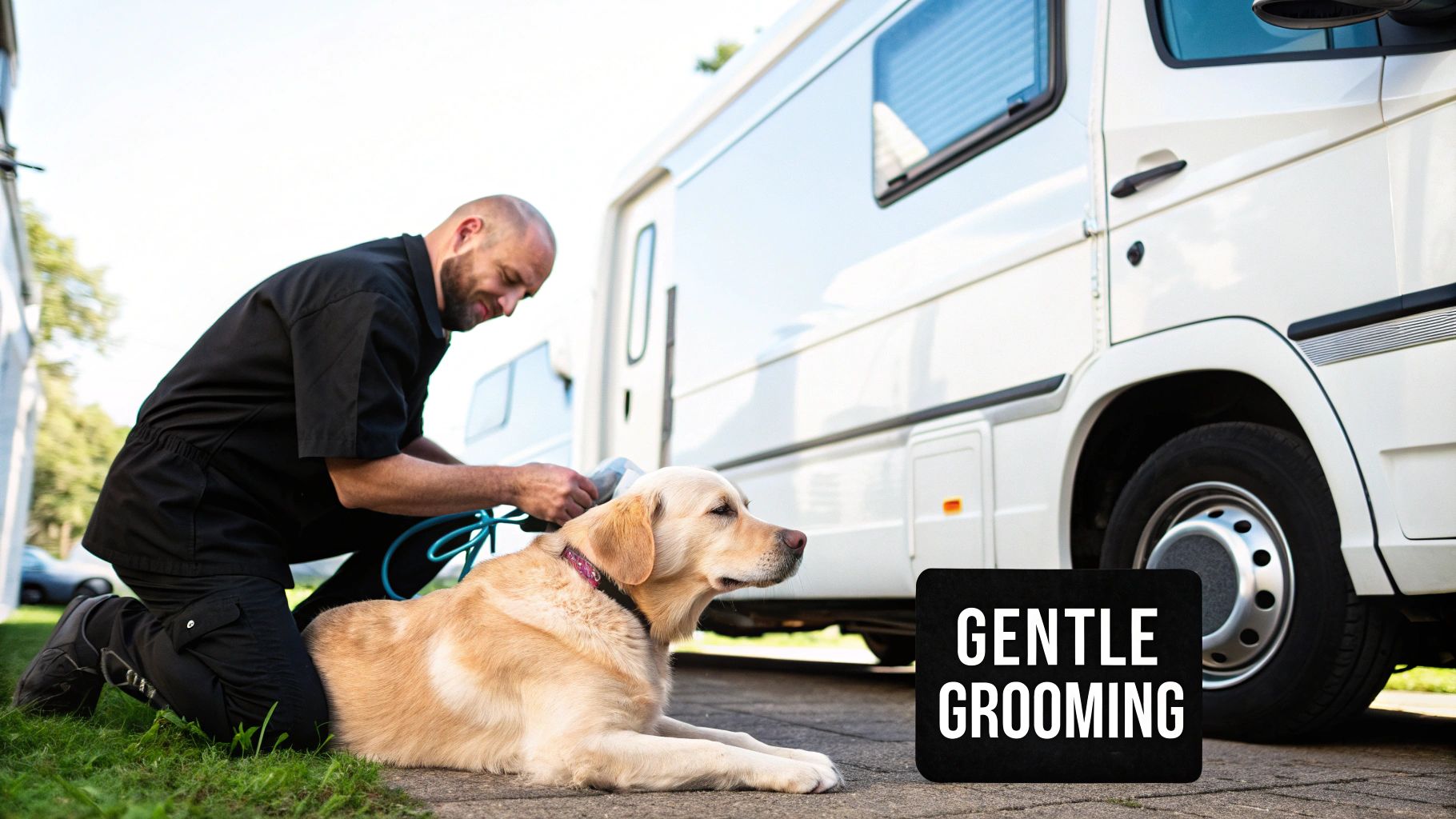
This is one area where professional expertise makes a huge difference. Our mobile pet grooming service brings that professional care right to your door, whether you’re in Jumeirah, Dubai Marina, or Downtown Dubai. We come equipped with specialised, hypoallergenic shampoos and conditioners that calm sensitive skin. This gentle, rehydrating approach is a game-changer for your dog's comfort, especially in a city like Dubai.
Building a Soothing Routine at Home
The key to healthy skin is a blend of professional grooming and consistent care at home. One of the biggest mistakes is over-bathing, which can strip the skin and make dryness worse. It's about finding a gentle, sustainable rhythm.
Here’s what a good routine looks like:
- Brush Regularly: Don't underestimate the power of brushing! It boosts blood flow and distributes their skin’s natural oils (sebum) through the coat, acting as a built-in moisturiser for their skin and fur.
- Dry with Care: After a bath, gently pat your dog dry instead of rubbing vigorously. If you use a hairdryer, keep it on the lowest heat and speed setting and hold it at a distance to avoid irritating their skin.
- Pick the Right Tools: Use brushes designed for your dog's coat. For pups with flaky, sensitive skin, a soft-bristle brush is often the kindest and most comfortable choice.
Living in a desert climate absolutely plays a role. In fact, research has linked the high heat and low humidity common in our region to higher rates of atopic dermatitis in dogs. You can read the full study on environmental skin stress here if you want to dive into the science.
Why Mobile Grooming Is a Relief for Itchy Dogs
A trip to a busy grooming salon can be stressful for any dog, let alone one who's already feeling itchy and uncomfortable. As we know, stress only makes skin problems worse. Our at-home service bypasses that by creating a calm, familiar, one-on-one environment.
At every visit, our professional groomers assess your dog’s skin. They will select the most suitable moisturising products for whatever their skin needs that day. It’s this personalised approach that offers real relief and supports your dog's well-being.
That combination of a stress-free setting and expert product choice can truly help turn things around. By making our mobile pet grooming service part of your dog's wellness plan, you're giving them consistent, professional support to help bring back that healthy, comfortable skin.
Got Questions About Your Dog's Flaky Skin? You're Not Alone.
When you notice those little white flakes on your dog's coat, a million questions can pop into your head. It's completely normal to worry! To provide some peace of mind, we’ve put together answers to some of the most common concerns we hear from pet parents all over Dubai.
Is Dubai's Water to Blame for My Dog's Flaky Skin?
It can certainly be a contributing factor. The desalinated water here in Dubai is quite "hard," meaning it's high in minerals. While safe to drink, regular bathing in it can be tough on a dog's skin and coat, stripping away natural moisture over time.
Think of it as an accomplice rather than the main cause. Hard water rarely causes flaky skin by itself, but it can worsen the situation if your dog already has dry or sensitive skin. Using a high-quality, hydrating shampoo helps to counteract this effect.
How Often Should I Be Bathing a Dog With Flaky Skin?
This is a big one, and it’s easy to get wrong. Many people think more baths will wash the flakes away, but it usually does the opposite. Over-bathing strips the skin’s protective oils, leaving it even drier and more irritated.
For most dogs dealing with flakiness, a bath every 4 to 6 weeks is plenty. The exception is if your vet has prescribed a specific medicated shampoo—in that case, follow their instructions carefully. Our mobile dog grooming team can help create a custom bathing schedule that supports your dog's specific skin condition.
Is Dog Dandruff Just Like Human Dandruff?
It might look the same, but what we call "dandruff" in dogs is usually more complicated. Vets refer to it as seborrhoea, and it's almost always a symptom that something else is going on.
Think of the flakes as a smoke signal from your dog's body. The real "fire" could be anything from allergies or parasites to a hormonal issue or, as we've discussed, a problem with their gut-skin axis. Simply using an anti-dandruff shampoo won't fix the root cause. You need a vet's diagnosis to properly address your dog's health.
When Is It Time to Worry About Flaky Skin?
A few flakes here and there, especially with our dry climate, isn't necessarily a cause for alarm. But you should definitely call the vet if you see the flakes along with any of these other red flags:
- Intense, non-stop itching and scratching
- Red, inflamed patches of skin
- Bald spots or thinning fur
- A greasy coat or a musty smell
- Sores, scabs, or painful "hot spots"
These are signs that your dog is truly uncomfortable and needs professional care. Getting them checked out quickly is the best way to give them relief and prevent a minor issue from becoming a major one.
At Pets In The City, we know that healthy skin comes from a holistic approach—combining diet, grooming, and expert veterinary advice. Our professional mobile pet grooming service has been caring for pets across Dubai since 2011. We are here to support you and your pet's well-being.
Experience the convenience and expert care of at-home pet grooming. Book your appointment online today and let us bring the solution right to your door.
