
We have all had a little chuckle about "dog breath," often accepting it as one of those quirky things our pets do. But what if that odour is actually a red flag? It could be your pet's way of telling you that something is brewing in their mouth, and it's time to pay attention. For dedicated pet owners here in Dubai, from Jumeirah to Mirdif, recognising this early sign is the first, most crucial step in ensuring your companion's long-term health and well-being.
Why 'Dog Breath' Is a Bigger Deal Than You Think
Think of that persistent odour as the check engine light on your car's dashboard. It’s a small, easy-to-ignore signal, but it points to a problem under the bonnet that could become much worse if left unchecked.
Good dental health is so much more than a bright smile and fresh breath—it is a cornerstone of your pet's overall well-being. The bacteria causing that unpleasant smell can lead to painful inflammation and infections right in their mouth.
The real danger lies beneath the gumline. Bacteria from dental disease can enter the bloodstream and travel to vital organs like the heart, liver, and kidneys. Suddenly, a dental problem can become a whole-body health crisis.
The Scale of the Problem in Dubai
This is not just a minor issue affecting a few unlucky pets. Periodontal disease is one of the most widespread health problems we see in veterinary practice. Studies show that a staggering 85% of dogs and cats have some form of dental disease by the time they reach age three, a statistic that vets right here in the UAE see play out in their clinics every day.
Living in Dubai, proactive care is even more important. Our urban lifestyle, the diets we feed our pets, and even the warm climate can impact their oral hygiene. Catching the signs early is the absolute key to prevention and treatment, which is why it's so helpful to understand the common pet health issues in Dubai.
Here’s a simple checklist to help you spot potential dental trouble before it gets serious. If you notice any of these signs, it is important to see a vet for a proper diagnosis.
Quick Guide to Pet Dental Warning Signs
| Symptom | What It Could Mean | Recommended Action |
|---|---|---|
| Bad Breath (Halitosis) | Bacterial build-up, early gum disease | Schedule a routine dental check-up with your vet. |
| Pawing at the Mouth | Oral pain, something stuck in teeth | Inspect the mouth carefully; see a vet if pain persists. |
| Difficulty Chewing | Painful teeth or gums, fractured tooth | Visit your vet for a professional oral examination. |
| Red or Swollen Gums | Gingivitis, infection | An immediate vet consultation is recommended. |
| Yellow-Brown Tartar | Plaque hardening, advanced dental disease | Professional veterinary cleaning is needed. |
| Drooling Excessively | Dental pain, abscess, or other oral issues | See a vet to diagnose the underlying cause. |
Remember, your pet cannot tell you when their mouth hurts. Keeping an eye out for these subtle changes is one of the kindest and most responsible things you can do for their care.
More Than Just Bad Breath
Of course, "dog breath" is not the only aroma pet owners have to manage. Lingering smells in your home can come from a variety of sources. To truly keep your home fresh and clean, you need to address the root cause, which is why comprehensive pet odor treatment options are worth looking into for a healthy living space.
By shifting your perspective and seeing dental care as a vital piece of your pet's health puzzle, you can prevent a world of discomfort. It all begins with looking past the breath and listening to what your pet's mouth is trying to tell you.
Getting to Grips with Your Pet's Dental Health
To truly get a handle on your pet's oral health, you first need to know what you’re looking at. Think of a healthy mouth like a well-built house—it needs a solid foundation. Once you understand the basics, you will be much better equipped to spot trouble before it becomes serious.
So, what happens inside your pet's mouth after a meal? Almost immediately, a soft, sticky film of bacteria called plaque begins to form on their teeth. It is a bit like the residue left on a dinner plate, easy enough to wipe away with a good clean.
But if that plaque is left to its own devices, it hardens into tartar (sometimes called calculus). Tartar is a different matter entirely. It’s a hard, yellowish-brown deposit that latches onto the teeth like concrete and simply cannot be brushed off. This requires a professional vet with the correct tools to remove it safely.
From Plaque to Pain: How Dental Disease Sneaks Up
The path from a healthy mouth to a painful one is surprisingly predictable. It starts quietly, but without intervention, it can quickly escalate and affect your pet's overall well-being and comfort.
- A Healthy Mouth: The gums should be a healthy pink and firm to the touch, with no swelling. Teeth are clean and white. This is the ideal starting point for your pet's oral health.
- Stage 1: Gingivitis: This is the first red flag. Plaque build-up along the gumline causes inflammation. You might notice some redness or that classic "doggy breath." The good news? At this stage, the condition is 100% reversible with a professional clean and consistent home care.
- Stage 2: Early Periodontitis: Now, the plaque has hardened into tartar. The inflammation worsens, and the gums might look swollen and sore. You may see them start to recede from the teeth, creating small pockets where even more bacteria can set up camp.
- Stages 3 & 4: Advanced Periodontitis: At this point, the situation has become serious. The damage is now severe and, unfortunately, irreversible. The tissues and bone that support the teeth are being destroyed, leading to wobbly teeth, significant pain, and eventual tooth loss. The scariest part is that bacteria can now easily slip into the bloodstream and impact vital organs.
It's worth remembering that our pets are masters of hiding pain. By the time they start dropping food or refusing to eat, their dental disease is often already at an advanced stage. This is why regular peeks inside their mouth at home are your most powerful tool for early detection.
What a Healthy Mouth Actually Looks Like
Every part of your pet’s mouth has an important job. The teeth are for grabbing and chewing, of course, but the gums are the real unsung heroes. Healthy gums form a tight seal, a protective barrier that stops harmful bacteria from sneaking below the gumline to attack the sensitive tooth roots and jawbone.
This handy visual gives you a closer look at what's going on inside a dog's mouth and highlights some of the common problems a vet in Dubai might spot during a check-up.
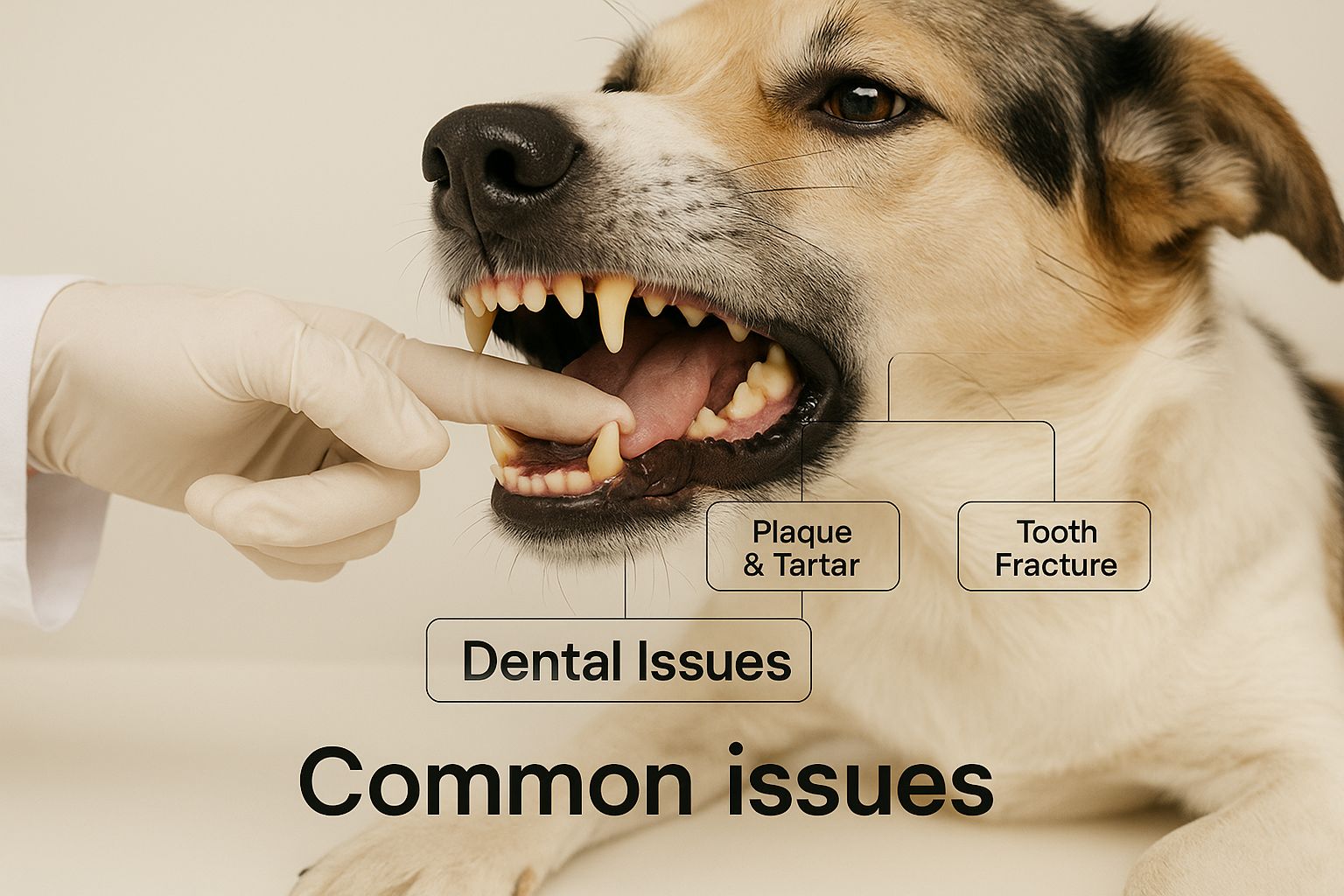
As you can see, issues like tartar buildup and gum inflammation are usually quite obvious and are the main signals that it's time for professional care. Mastering these basics is a cornerstone of great pet care in Dubai and means you can walk into your vet's office ready to have a confident, informed chat about your best friend's health.
Common Dental Problems in Dubai's Pets
While every furry friend is an individual, vets here in Dubai tend to see the same culprits behind most dental issues. Getting to know these common problems is your first line of defence—it helps you spot trouble early and get your companion the right help, right away.
The great news is that most of these conditions are very manageable when caught in their early stages. These problems don't just appear overnight; they creep in quietly. It is often a combination of factors, from breed-specific quirks to the urban lifestyle many pets lead in areas like Dubai Marina.
Gingivitis: The Reversible First Step
Think of gingivitis as the first warning sign. It is the earliest and most common stage of gum disease, and it is simply an inflammation of the gums caused by plaque buildup. You might notice your pet's gums are a bit red, perhaps even a little puffy. That classic "dog breath" is another major clue.
Here’s the most important takeaway for gingivitis: it is completely reversible. A professional cleaning followed by a solid at-home care routine can bring those gums right back to perfect health. This is precisely why it is so important to act on those first subtle signs.
Periodontitis: When Things Get Serious
If gingivitis is left unaddressed, it can progress to periodontitis. This is a much more serious condition and, unfortunately, it is not reversible. The inflammation dives deep below the gumline, starting to destroy the very bone and tissue that hold the teeth in place.
This damage creates small pockets between the gums and teeth, which are perfect hiding spots for harmful bacteria to thrive. Periodontitis is painful and can lead to loose teeth, abscesses, and eventually, tooth loss. The goal here is to intervene as early as possible to slow its progression and preserve as many teeth as possible for your pet's comfort.
Important Note: You cannot diagnose these conditions just by looking. If you spot red gums, obvious tartar, or your pet is suddenly fussy with their food, it’s time for a vet visit. A proper professional examination is the only way to know what’s really going on and map out a treatment plan.
Fractured Teeth: A Common Hazard
Our pets, especially dogs, explore the world with their mouths. Sometimes, that curiosity leads to a broken tooth. We see this all the time from pets chewing on things that are just too hard—think hard bones, stones from the garden, or even some of those super-tough synthetic toys.
A cracked tooth is not just a cosmetic problem. It can expose the sensitive pulp deep inside, which is incredibly painful for your pet. Worse, it creates a direct path for bacteria to invade the root and even the jawbone. Any broken tooth needs to be checked by a vet without exception.
Feline Stomatitis: A Painful Condition in Cats
While our feline friends get gingivitis and periodontitis just like dogs, they are also prone to a uniquely painful condition called stomatitis. This is a severe, widespread inflammation of the entire mouth and gums that causes extreme discomfort.
We do not know the exact cause, but the leading theory is that it is an over-the-top immune reaction to even small amounts of plaque. Cats suffering from stomatitis often find it too painful to eat, may drool a lot, and might stop grooming themselves. It’s a challenging condition that absolutely requires dedicated veterinary care to manage their health and comfort.
Learning to spot the signs of these common issues is half the battle. Whether you are in Downtown Dubai or Mirdif, your watchful eye at home is the perfect partner to professional veterinary care, creating the foundation for a lifetime of good dental health.
The Unique Challenges for Pet Dental Care in Dubai
Living with a pet in Dubai is a wonderful experience, but our sunny climate and city lifestyle bring a few unique challenges, especially when it comes to their dental health. Staying on top of your pet's oral care is always important, but here, it’s absolutely critical.
One of the biggest factors is the heat. We are always told to stay hydrated, and the same goes for our pets. Even mild dehydration can make their saliva thicker and less effective at washing away food particles and bacteria. Think of it as a natural mouthwash that’s suddenly not working as well. This creates the perfect breeding ground for plaque to build up and eventually harden into tartar. Simply ensuring your pet always has fresh, cool water is a huge first step in their care.
Diet and the Urban Pet Lifestyle
Many of our pets, especially those living the high-rise life in places like Downtown Dubai or Dubai Marina, have a lifestyle that impacts their teeth. Modern pet foods, particularly the soft and wet varieties, are great for nutrition but do not offer much in the way of a natural tooth-scrubbing effect.
In the wild, animals gnaw on things that mechanically clean their teeth with every bite. The convenient, processed diets most of our city pets eat just do not do that. This means plaque can accumulate much faster if we are not diligent with an at-home cleaning routine.
With this shift in diet and lifestyle, the responsibility for keeping those teeth clean falls squarely on our shoulders as owners. We have to actively replicate that natural cleaning process through brushing, dental chews, and professional care.
This growing awareness is not going unnoticed. The pet dental health market here in the Middle East and Africa is growing, driven by dedicated owners who understand the importance of oral hygiene. This reflects a deep commitment to pet well-being across the region.
High Standards for Pet Care in Dubai
Dubai's pet owner community sets a very high standard for animal care. We see our pets as true family members, and that love extends to every aspect of their well-being, including their pearly whites. This commitment is particularly strong among the many expatriates who have brought their furry companions across the world to live here. If you are new to the city, our guide on relocating your pet to Dubai provides a complete veterinary checklist to help make the move easier.
Putting your pet’s dental health first isn't just about avoiding bad breath—it's about being a responsible, modern pet owner. It fits perfectly with the caring attitude that defines Dubai’s pet-loving community. By understanding these local challenges and tackling them head-on, you are ensuring your best friend has a happy, healthy, and comfortable life in our amazing city.
Setting Up Your At-Home Dental Care Routine
The best way to tackle pet dental problems is to prevent them before they start. And that happens right at home, with you. Building a solid, daily dental care routine is the most important thing you can do for your pet’s oral health between vet check-ups. The key is to find a rhythm that works for both of you—something easy and stress-free.
Think about it this way: you brush your own teeth every day to keep cavities and gum issues at bay. It is exactly the same for our pets. A few minutes of prevention each day can save them from a world of pain and save you from significant vet bills down the road. It's all about proactive care, not reactive treatment.
The Gold Standard: Daily Tooth Brushing
When it comes to keeping those pearly whites clean, nothing beats good old-fashioned daily brushing. It’s the single most effective way to remove the soft, sticky plaque that builds up after meals before it has a chance to harden into stubborn tartar.
Now, getting your pet on board with a toothbrush takes a bit of patience and a lot of positive reinforcement, especially if it is a new concept for them. Here’s a gentle way to get started:
- Start with a Simple Touch: For a few days, just practise gently lifting their lips for a second or two. Follow it up immediately with a tasty treat and some happy praise. Keep doing this until they seem completely relaxed with you handling their mouth.
- Introduce the Toothpaste: Use a toothpaste made specifically for pets (human toothpaste is toxic for them). Dab a little on your finger and let them have a lick. They usually come in appealing flavours like chicken or beef that pets find irresistible.
- Combine Your Finger and the Paste: Once they’ve decided the toothpaste is delicious, start gently rubbing that paste-covered finger along their teeth and gums. Keep it quick, positive, and always end on a high note with a reward.
- Bring in the Brush: It's time! Introduce a pet toothbrush or a small finger brush. Let them sniff it and get used to it first. Then, add the toothpaste and start brushing the outside surfaces of their teeth with a gentle circular motion.
The secret is to make it a fun, positive ritual. Keep sessions short—even a minute or two is a huge win!—be patient, and never force it. A calm and reassuring routine builds the trust you need to make this a daily habit for their well-being.
This whole process is a lot smoother if your pet is already used to being handled. Our professional at-home grooming services can be a fantastic way to ease them into it. Our experienced groomers are experts at getting pets comfortable with this kind of interaction, all within the safe and familiar environment of their own home.
Great Alternatives When Brushing Isn't Possible
We understand. Some pets will simply never accept a toothbrush, no matter how many treats are involved. The good news is you have other options that can still make a real difference. While they are not a perfect substitute for brushing, they are far better than doing nothing at all.
- Dental Wipes: Think of these as a fantastic first step or a solid plan B for brush-averse pets. The texture on the wipe helps you physically scrub away plaque.
- Water Additives: This is as easy as it gets. You just add a few drops of a tasteless solution to their water bowl each day. It contains enzymes that work to fight plaque and bad breath.
- Special Dental Diets: Some pet foods are engineered to clean teeth. The kibble is typically larger and has a unique, fibrous texture that literally scrubs the tooth's surface with every bite.
- Vet-Approved Dental Chews: Not all dental treats are created equal. Look for the Veterinary Oral Health Council (VOHC) seal of approval. This seal means the product has been scientifically proven to help reduce plaque or tartar buildup.
To help you decide what is right for your furry friend, here's a quick breakdown of the most common at-home tools.
Choosing Your At-Home Dental Care Tools
This simple comparison can help you pick the right daily dental care methods that fit your pet's personality and your lifestyle here in Dubai.
| Method | Effectiveness Level | Best For | Pro Tip |
|---|---|---|---|
| Tooth Brushing | ★★★★★ | All pets, if they will tolerate it. The absolute best for preventing plaque. | Start young! Puppies and kittens are much easier to train for brushing. |
| Dental Wipes | ★★★★☆ | Pets who resist a brush but do not mind you touching their mouth. | Great for travel or quick clean-ups after a messy treat. |
| Dental Chews/Diets | ★★★☆☆ | Heavy chewers and pets who are very food-motivated. | Always supervise your pet with chews to prevent choking hazards. |
| Water Additives | ★★☆☆☆ | Extremely fussy pets or as a supplemental boost to another method. | It’s a low-effort starting point, but combine it with another method for best results. |
Ultimately, the best routine is the one you can consistently stick to every single day. Whether you are in a villa in Mirdif or an apartment in Dubai Marina, creating that daily dental habit is one of the kindest things you can do for your pet’s long-term health and happiness.
What to Expect from a Professional Pet Dental Cleaning
The idea of a professional dental cleaning, sometimes called a prophylaxis, can make any pet owner in Dubai a bit anxious. It is usually the general anaesthesia part that causes the worry. Let's walk through exactly what happens, step-by-step, so you can see how modern safety protocols make this a routine and incredibly valuable procedure for your pet's health.
Knowing what goes on behind the scenes helps put your mind at ease. A professional cleaning is the only way to remove that stubborn, rock-hard tartar. More importantly, it allows your vet to clean and check the critical area below the gumline—and that is where the real problems begin.
The First Step: Safety Checks
Before a single tool is picked up, your vet's number one priority is to ensure your pet is a safe candidate for anaesthesia. This is not a one-size-fits-all approach; it’s a careful, personalised health check.
This first phase almost always involves:
- A Full Physical Examination: Your vet will have a thorough listen to your pet’s heart and lungs and check their overall condition from nose to tail.
- Pre-Anesthetic Blood Tests: This is a non-negotiable, crucial step. These blood tests provide a clear picture of how well the organs are working, especially the liver and kidneys, which process the anaesthetic drugs. It helps the vet team spot any hidden issues that might need attention first.
These checks give the vet all the information they need to tailor an anaesthesia plan just for your pet, choosing the safest drugs and dosages for their specific size, age, and health status.
During the Procedure: A Carefully Monitored Process
Once your pet is peacefully asleep under anaesthesia, the real work begins. Rest assured, they are not left alone for a second. A dedicated veterinary nurse or technician monitors their vital signs—heart rate, blood pressure, oxygen levels—the entire time, just like in a human hospital.
The cleaning itself has a few key stages:
- Thorough Oral Exam: The vet inspects every single tooth and the surrounding gums, making notes of any problem areas or deep pockets.
- Dental X-Rays: You cannot see what is happening beneath the surface. Dental x-rays are often taken to get a look at the tooth roots and jawbone, revealing abscesses, fractures, or bone loss that would otherwise go completely unnoticed.
- Scaling Away Tartar: Using a special ultrasonic scaler, the vet carefully removes all the built-up plaque and tartar from the teeth, both above and below the gumline.
- Polishing the Teeth: After all that scaling, the teeth are polished to a super smooth finish. This isn't just for looks—it buffs away tiny scratches left by the scaler, making it much harder for new plaque to get a grip.
Many people think of it as just a 'deep clean,' but it is so much more. It is a detailed medical procedure. The anaesthesia is essential not just for the cleaning, but to allow the vet to perform a completely painless and thorough examination of the entire mouth, something that is simply impossible while a pet is awake.
Post-Procedure: Recovery and Home Care
When the cleaning is all done, your pet is moved to a warm, quiet recovery area. They will be watched closely by the veterinary team as they gently wake up. Most pets are a bit groggy for the rest of the day but are usually back to their happy, hungry selves by the next morning.
Your vet will send you home with clear aftercare instructions. This might mean feeding soft food for a couple of days and perhaps some pain relief to keep them comfortable. This is also the perfect opportunity to kickstart that at-home dental care routine we talked about—starting with a perfectly clean slate.
Got Questions About Your Pet's Teeth? We Have Answers
When it comes to your pet's health, you want answers you can trust. We completely understand. So, we have pulled together some of the most common questions we hear from pet owners all over Dubai to help you feel more confident about looking after those pearly whites.
Think of this as a quick-fire round to clear up any lingering doubts and provide you with practical, helpful information.
How Often Does My Pet Really Need a Professional Dental Cleaning in Dubai?
Honestly, it really depends on your specific pet, but a great starting point is an annual dental check-up with your vet. They will take a good look inside your pet's mouth and advise you if it is time for a professional cleaning.
A few things can influence how often they might need one:
- Breed Matters: Small dogs with crowded mouths, like Shih Tzus or Pomeranians, often trap more food and debris. This makes them magnets for tartar buildup, meaning they might need cleanings more frequently than a large dog with more space between their teeth.
- Age is a Factor: Just like with people, older pets need more dental TLC as problems can develop more quickly.
- Your At-Home Routine: If you are brushing your pet's teeth every day, you will likely be able to extend the time between professional cleanings much further, promoting better overall health.
What About Anaesthesia-Free Dental Cleanings? Are They Safe?
The idea of skipping anaesthesia is certainly tempting, but leading veterinary dental specialists advise against it. These procedures are largely cosmetic and can give you a false sense of security about your pet's oral health.
Here’s the issue: an anaesthesia-free cleaning just scrapes the tartar you can see. It cannot reach the real trouble spot, which is below the gumline. That’s where periodontal disease lurks and causes the most serious damage. For a cleaning that’s truly deep, thorough, and safe for your pet's comfort and well-being, general anaesthesia remains the gold standard of care.
How Can Your Mobile Grooming Service Help With My Pet's Dental Health?
That is a great question! While our mobile pet grooming service in Dubai does not replace your vet, we are a key partner on your pet's oral health team. Our groomers can add a gentle tooth brushing service to any dog grooming or cat grooming session, which is a fantastic way to combat daily plaque.
But here’s the true benefit: our calm, one-on-one at-home service helps your pet become accustomed to having their mouth and face handled in a place they feel safe and comfortable. Creating that positive experience makes it so much easier for you to brush their teeth at home every day—which is the absolute foundation of great dental health.
At Pets In The City, we believe pet care is a team effort between you, your vet, and our professional team. Let us show you just how convenient and caring our mobile grooming services can be, supporting your pet’s total wellness, right on your doorstep.
Experience the convenience of at-home pet grooming. Book your at-home grooming appointment today and give your furry friend the gift of gentle, expert care.
