
Moving your pet to Dubai involves a specific set of veterinary requirements, but with careful planning, the process can be straightforward and stress-free. Your journey begins with three critical milestones: an ISO-compliant microchip, a correctly timed rabies vaccination, and a valid UAE import permit. Securing these correctly sets the foundation for a smooth and comfortable move for your beloved companion.
Mapping Out Your Move to Dubai
Bringing a pet to a new country is a significant undertaking, and it's natural to feel a mix of excitement and uncertainty about where to begin. The secret to a successful relocation is viewing the process as a clear roadmap. Each step builds on the last, designed to ensure your pet’s health, safety, and full compliance with UAE regulations. Our goal is to replace any feelings of overwhelm with calm, confident reassurance.
Having supported countless families as they settle into life in Dubai with their pets, we know that forward-thinking and organisation are key. Let's walk through every checkpoint together, starting with the absolute essentials for your pet's well-being.
The Critical First Steps
Before you even consider booking flights, there are a few foundational tasks that must be completed in a specific order. Think of these as the non-negotiable cornerstones of your pet's entire relocation journey, crucial for their health and safety.
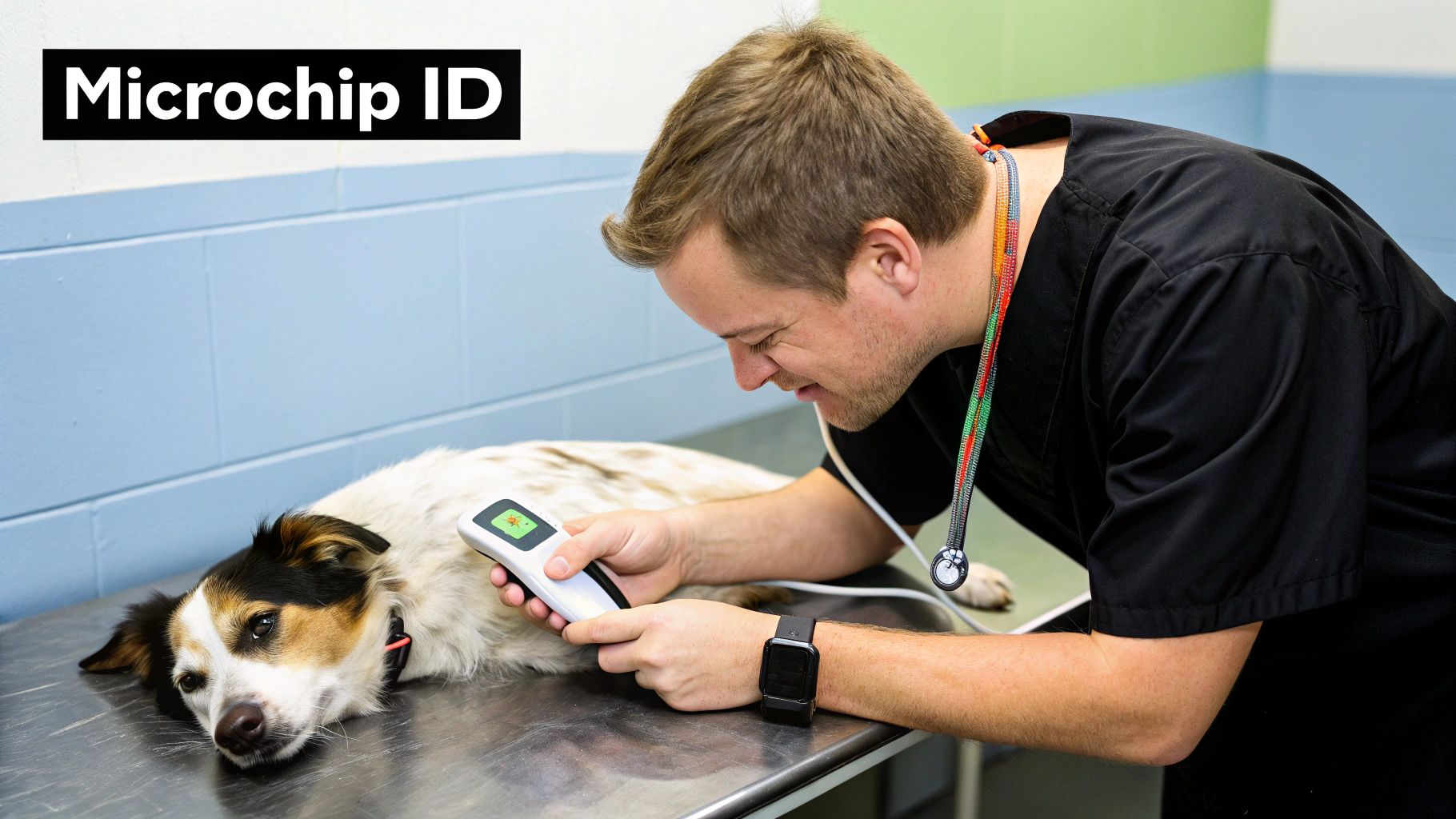
- Get an ISO-Compliant Microchip: This is your pet’s permanent identification and the very first thing you must do. It must be a 15-digit, ISO 11784/11785 compliant chip. Every document and vaccination from this point forward will be directly linked to this unique number.
- Administer the Rabies Vaccination: Once the microchip is implanted and scanned, it's time for the rabies vaccination. The timing here is critical—the vaccine absolutely must be administered after the microchip is implanted. If it's done before, UAE authorities will not consider it valid.
- Secure Your Import Permit: This is the official green light from the Ministry of Climate Change and Environment (MOCCAE) that allows your pet to enter the country. It's an online application and an essential document you cannot travel without.
This simple flow chart helps to visualise how these first three steps are linked for your pet's care.
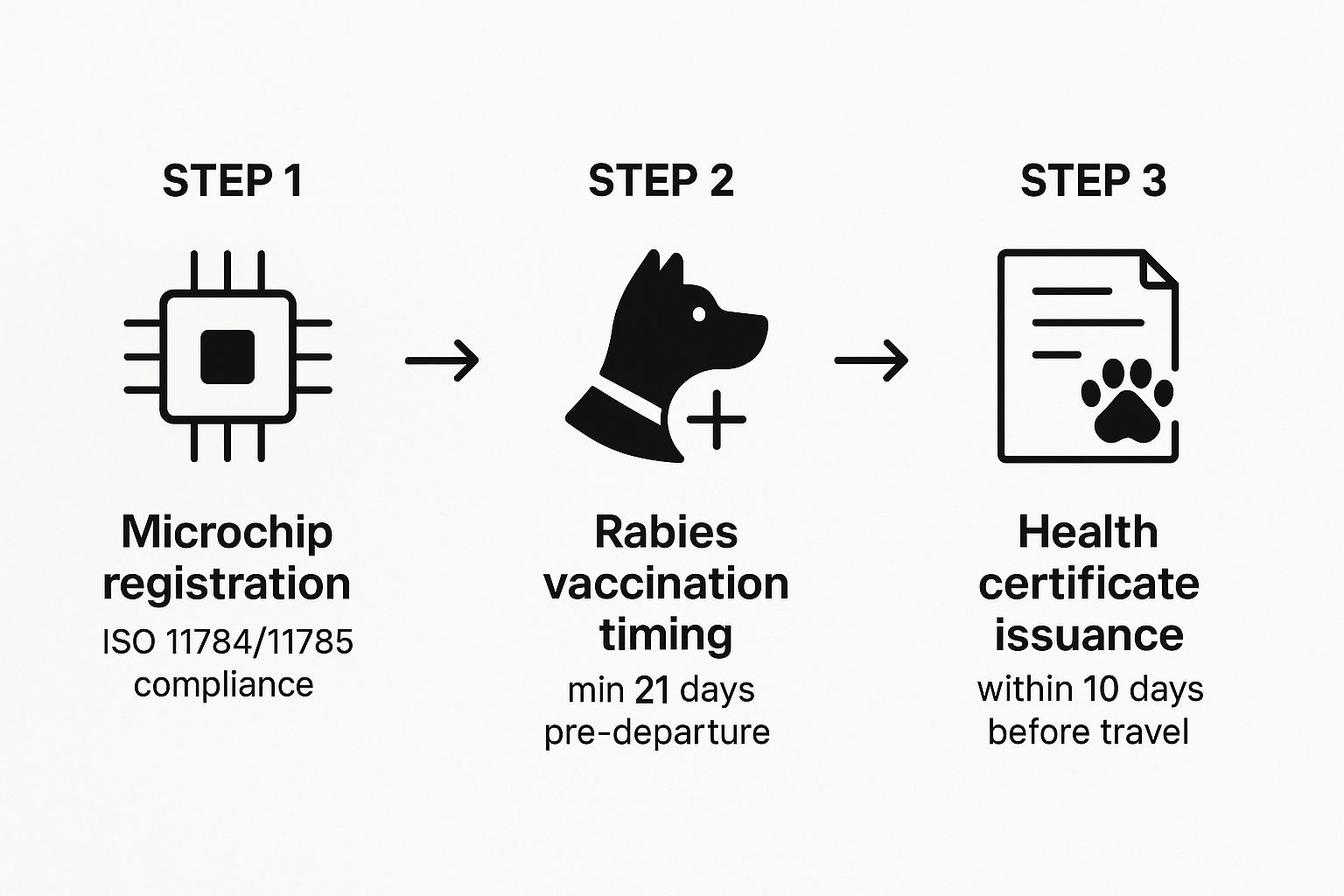
As you can see, it's a sequential process. Each step lays the groundwork for the next, forming a solid foundation for your pet’s successful and safe arrival in Dubai.
Understanding the Legal Framework
Dubai's pet import rules are strict for a compassionate reason—they're in place to protect local animal populations and public health. The UAE government is very clear: all incoming pets must be microchipped, and the rabies vaccination must be given at least 21 days before travel and still be valid upon arrival. If these deadlines are missed, your pet could face quarantine or, in a worst-case scenario, be denied entry.
Of course, before you can bring your pet, you need to sort out your own legal status. A crucial part of your own move is figuring out how to get your UAE Residence Visa.
Expert Tip: We always advise clients to create a dedicated "pet passport" folder from day one. Keep both physical copies and digital scans of everything: vet records, microchip papers, vaccination certificates, and all permit applications. This level of organisation will provide immense peace of mind.
To give you a quick overview, here’s a simple checklist of the essentials.
Dubai Pet Relocation At-a-Glance Checklist
This table breaks down the core veterinary and paperwork tasks you'll need to handle. It's a great quick reference to keep you on track and feeling reassured.
| Requirement | Timeline/Key Detail | Purpose |
|---|---|---|
| ISO Microchip | Must be implanted before the rabies vaccination. | Your pet's permanent, scannable identification. |
| Rabies Vaccination | Must be given after microchipping. | Protects against rabies and is a mandatory UAE requirement for animal health. |
| Other Vaccinations | Check with your vet for required dog/cat vaccines (e.g., DHPPi/FVRCP). | Ensures your pet’s health and protection against common diseases. |
| Rabies Titer Test (RNATT) | Required for pets from "high-risk" countries. | Verifies the rabies vaccine is effective, ensuring maximum protection. |
| Import Permit | Apply via MOCCAE website; valid for 30 days. | Official permission for your pet to enter the UAE. |
| Health Certificate | Issued by a government-accredited vet within 10 days of travel. | Confirms your pet is healthy and their well-being is prioritised for flying. |
This checklist covers the most important items. As you work through them, you'll find the whole process becomes much less daunting.
By tackling these initial steps with care and attention to detail, you're paving the way for a much smoother journey. Before you know it, you'll be focusing on the fun part: starting your new life in sunny Dubai with your best friend by your side.
Sorting Out Vaccinations and Health Checks
Think of your pet’s health record as their official passport to Dubai. While the rabies vaccine receives most of the attention, the UAE has a full set of health standards designed to keep every animal—including yours—safe and sound. This part of the process is where we delve into the specifics of what your veterinarian needs to do to ensure a smooth, worry-free entry.
Getting these health requirements right isn't just about ticking boxes; it’s about protecting your companion's well-being and respecting the high biosecurity standards that help Dubai’s pet community thrive. A solid vaccination and treatment plan is your ticket to a stress-free move.
More Than Just a Rabies Jab: Core Vaccinations
The rabies vaccine is a critical first step, but it’s just the beginning. UAE authorities require proof that your pet is protected against a host of common diseases. Your veterinarian will administer these and log everything in your pet's official health record.
For dogs, this means ensuring their core vaccinations are up to date. These are usually given as a single combination injection and are essential for their health certificate.
- DHPPi/L: This is the standard for canines. It protects against Distemper, Hepatitis, Parainfluenza, Parvovirus, and often includes Leptospirosis coverage for comprehensive health protection.
Cats have their own set of required vaccinations that are just as important for getting the green light to travel and ensuring their well-being.
- FVRCP: This is the core combination vaccine for felines, covering Feline Viral Rhinotracheitis, Calicivirus, and Panleukopenia.
It’s crucial that a licensed vet administers these vaccinations and that they are current before your final health check. Your vet will know the correct schedule based on your pet's age and health history.
The Importance of Parasite Prevention
Dubai's year-round warmth is lovely for us, but it also means fleas, ticks, and other parasites can be a persistent concern. For this reason, the UAE requires every pet to be treated for both internal and external parasites shortly before they travel. This is a non-negotiable part of securing their import permit.
This treatment must be administered within 14 days of your flight. Your veterinarian will need to use a broad-spectrum product and formally record the product name and the exact date and time it was given on the health certificate.
A Quick Tip from Experience: Think of this parasite treatment as your pet's first line of defence. Getting it done just before you leave ensures they don't bring any unwanted hitchhikers and are protected from the moment their paws touch the ground in a new place like Jumeirah or Dubai Marina.
This kind of preventative care is a big part of being a responsible pet owner here. To keep your furry companion comfortable long after you’ve unpacked, check out our useful pet care tips to keep them safe and healthy in Dubai's unique climate.
Your Actionable Vet Timeline
When it comes to the veterinary preparation for Dubai, timing is absolutely everything. A well-organised schedule avoids last-minute stress and ensures all paperwork is valid when you need it. Here’s a helpful timeline you can adapt to keep your vet visits on track.
3-6 Months Before You Fly:
- First, confirm your pet has an ISO-compliant, 15-digit microchip.
- Administer the rabies vaccination (this must happen after the microchip is implanted).
- If you're coming from a "high-risk" country, book the Rabies Titre Test (RNATT) blood draw for 21-30 days after the rabies shot.
- Update all other core vaccinations (DHPPi/L for dogs, FVRCP for cats) to ensure their health is optimal.
Inside 14 Days of Travel:
- Visit your vet for the mandatory internal and external parasite treatments (for fleas, ticks, and worms).
- Double-check that the vet has recorded the product details on the health record for official purposes.
Inside 10 Days of Travel:
- It's time for the final "fit-to-fly" health examination with your government-accredited veterinarian.
- This is when they will complete and sign the official UAE health certificate for export.
Sticking to a schedule like this ensures every requirement is met within its specific timeframe. A methodical, caring approach is the best way to make sure your pet’s health documents are flawless for their big journey.
Getting Your Official Paperwork in Order
Now that you’ve completed the health checks and vaccinations, it’s time to tackle the paperwork. This is often the part that feels most overwhelming for pet owners. But with clear guidance, you can navigate it with confidence and peace of mind.
Essentially, you need two key documents to bring your pet into the UAE: the Official Health Certificate and the UAE Import Permit. They work in tandem. One proves your pet is healthy and ready to fly, and the other is their official permission to enter the country.
Getting these documents perfectly correct is non-negotiable. A small mistake, a missed signature, or a date that’s off by a day can lead to serious stress and delays upon landing at Dubai International Airport (DXB). The goal here is to make your paperwork absolutely seamless for a smooth, happy reunion.
Decoding the Official Health Certificate
First up is the Official Health Certificate. This is a formal document that must be completed by a government-accredited veterinarian in your home country. It’s the official summary of your pet’s health, confirming they are fit for travel and free from infectious diseases.
Be aware: this certificate has a short validity period. It must be completed within 10 days of your pet's flight. It brings together all the critical details we've already covered, including:
- Your pet’s ISO-compliant microchip number.
- All the details of their rabies vaccination and other core vaccinations.
- The exact names and dates of their recent internal and external parasite treatments.
Here’s a crucial detail: after your veterinarian signs it, the certificate usually needs an official government stamp of approval. In the UK, for instance, this endorsement comes from the Animal and Plant Health Agency (APHA). You must find out your country’s specific requirements well in advance.
Expert Insight: We have seen this issue arise: a mismatched microchip number. Check, double-check, and then check again that the number on the health certificate is identical to the one on the vaccination records and the import permit application. A single incorrect digit can invalidate everything.
Securing the UAE Import Permit
The second piece of the puzzle is the import permit. This is issued directly by the UAE’s Ministry of Climate Change and Environment (MOCCAE), and you will apply for it online. Think of it as your official invitation to bring your pet to Dubai. It's valid for 30 days from the issue date, and your pet cannot travel without it.
The application itself is completed online, where you'll need to upload clear copies of your pet's documents, like their vaccination book and the freshly completed health certificate. The online portal is user-friendly, but precision is essential.
To help you get it right the first time, here are a few common pitfalls we've seen:
- Poor-Quality Scans: Ensure every document you upload is crystal clear. A blurry photo or a poorly scanned PDF can be a reason for your application to be rejected.
- Incomplete Information: Fill out every single box. That includes your contact details in Dubai—if you have a local mobile number or address, enter it.
- Incorrect Pet Details: It sounds obvious, but double-check that you’ve selected the right category (e.g., domestic dog) and entered the breed information correctly.
Navigating this administrative stage is a massive step forward in your relocation journey. While it may seem like a lot of steps, these rules are in place to uphold the high standards of pet care in Dubai and keep all animals safe. By tackling each step methodically, you're doing more than just paperwork; you're paving a safe path for your best friend to their new life in Mirdif or Downtown Dubai.
Getting Your Pet Ready for a Safe and Comfortable Flight
Once the vet visits are done and the official stamps are on the paperwork, you can finally turn your attention to the actual journey. This last stage of preparation is all about ensuring your pet’s flight is as calm, safe, and comfortable as possible. The less stress they feel, the more peace of mind you’ll have on travel day.
This part of the process focuses on three key areas: choosing the perfect travel crate, turning that crate into a positive space, and understanding the logistics of their flight and arrival in Dubai. A little thoughtful preparation here makes all the difference for that happy reunion at the other end.
Finding the Right IATA-Compliant Crate
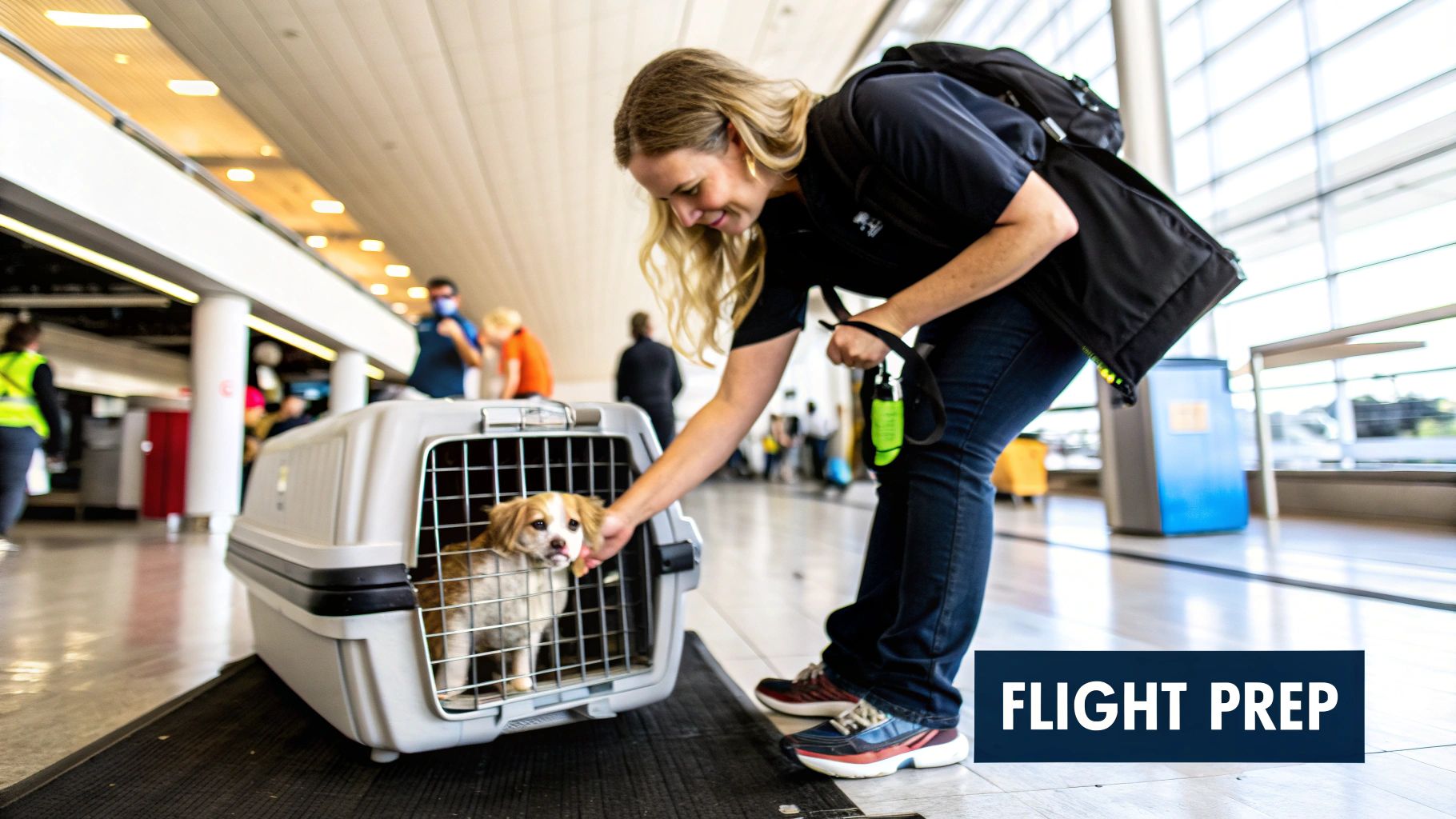
Think of your pet's travel crate less as a box and more as their own private cabin for the flight. For any airline to accept it, the crate must comply with the International Air Transport Association (IATA) regulations. These rules aren't just bureaucracy; they're designed from the ground up to ensure your pet's safety and well-being.
An IATA-compliant crate has a few non-negotiable features:
- Size is Everything: Your pet needs enough room to comfortably stand up straight, turn all the way around, and lie down in a natural position. Use a measuring tape—you’ll need their length from nose-tip to tail-base, and their height from the floor to the top of their head.
- Built for Safety and Security: It has to be made from rigid plastic or wood. The door must be metal with a spring-loaded lock that your pet can't accidentally paw or nudge open.
- Plenty of Fresh Air: The crate must have ventilation on at least three sides to guarantee good airflow throughout the trip, ensuring their comfort.
- Solid and Leak-Proof: The roof must not be collapsible, and the base needs to be completely leak-proof. Soft-sided carriers or wire-mesh crates are not permitted for air travel.
Turning the Crate into a Safe Haven
One of the kindest things you can do for your pet is to help them see their travel crate as a place of comfort, not a scary new object. This process, often called crate training, is best started weeks, if not months, before you fly to ensure they feel secure.
Simply place the open crate in a busy part of your house, like the living room. Line it with their favourite blanket, an old t-shirt that smells like you, and a few familiar toys. Start by dropping treats near the crate, then just inside the door, encouraging them to explore it on their own terms. Never force them inside.
A Tip from Experience: We always tell our clients to make the crate the best place in the house. Start feeding your pet their meals inside it with the door wide open. After a while, you can try closing the door for just a minute or two while you're still in the room, slowly building up the time. The goal is for them to see it as their personal den—a safe space, not a punishment.
Understanding "Manifested Cargo"
For almost every pet flying into Dubai, travelling as manifested cargo is the only approved method. We know that term can sound a bit clinical, but it's actually the safest, most regulated way for an animal to fly. It simply means your pet will travel in a pressurised, temperature-controlled hold that’s specifically designed for the well-being of live animals.
Unlike pets travelling as excess baggage, those flying as manifested cargo are cared for by specialist ground staff trained in animal welfare. This process ensures your pet is the very last to be loaded onto the aircraft and the absolute first to be taken off upon landing at Dubai International Airport (DXB).
It's no surprise that with Dubai's growing expat community, the demand for professional pet relocation has soared. A 2023 report highlighted that the pet travel market in the UAE is set to grow at 9.8% annually from 2025. This really underscores how important it is to work with experienced handlers and follow every rule to the letter. You can read more about the booming pet industry in the Middle East for more context.
The Arrival Scene at Dubai Airport
As soon as your flight touches down at DXB, your pet will be carefully moved to a dedicated animal handling facility. This is where you (or your relocation agent) will meet them and present all the original paperwork to the customs and veterinary officials on duty for a final check.
They’ll scan your pet’s microchip to confirm their identity matches the documents and give them a quick, final health check to ensure their well-being.
Once all the paperwork is cleared and the officials give the green light, your pet will be released to you. This is the moment all that careful planning was for—a safe and happy reunion, ready to start your new life together in sunny Dubai.
Settling into Your New Life in Dubai
You made it! Congratulations, you and your furry best friend have finally landed in Dubai. The paperwork and the long flight are behind you, but now the most rewarding part of the journey begins: helping your pet feel safe, happy, and truly at home in this wonderful new city.
This next phase is all about a gentle, reassuring transition. The focus is on creating new routines, exploring new scents, and showing them that this exciting place is now their home. Once you land, getting from the airport to your new residence will be a top priority. It's wise to look into pet-friendly transport options ahead of time; some services for luxury airport transfers in Dubai can accommodate pet crates, which can be a huge relief.
Your First Vet Visit in Dubai
One of the very first things you should do is book a wellness check-up with a local vet. This is more than a formality; it's a critical step that officially establishes your pet in the UAE's system and sets them up for a healthy, happy life here.
This initial appointment is your chance to get your pet’s microchip registered with the Dubai Municipality. This is mandatory for all pets in the city and officially links them to you in the central database – an essential step for their safety and your peace of mind.
Expert Tip: We always tell new arrivals to think of this first vet visit as your pet’s official "welcome to the neighbourhood" meeting. It's a fantastic opportunity to meet their new healthcare team and ask all your Dubai-specific questions, from local parasite risks to the best diet for this climate.
Helping Your Pet Acclimatise
Dubai’s climate can be a significant change for any pet not accustomed to year-round warmth. The intense summer heat, in particular, requires a careful and gradual adjustment period to ensure their comfort and health.
Whether you're in a villa with a garden in Mirdif or a high-rise apartment in Dubai Marina, managing their heat exposure is non-negotiable for their well-being.
- Adjust Walk Times: The golden rule is to walk them only in the early mornings or late evenings. Midday walks are a definite no-go during the hotter months.
- Paw Protection: Pavement and sand can become scorching, hot enough to burn their paw pads. Before you head out, always test the ground with the back of your hand. If it’s too hot for you, it’s too hot for them.
- Stay Hydrated: This is crucial. Ensure fresh, cool water is always available, perhaps in a few different spots around your home. Adding ice cubes to their bowl is a great tip for very hot days.
- Never Leave Them in a Car: Not even for a minute. The temperature inside a parked car here can become dangerously high in seconds. This is one of the most critical safety rules for any pet owner in Dubai.
Acclimatising is also about understanding how the local environment affects their skin and coat. Enjoying the outdoors is one of the best parts of living here, but it comes with its own unique care needs. You can learn more in our guide to beach locations for dogs in Dubai and essential skin care.
A Refreshing Start with Professional Grooming
After being in a travel crate for a long journey, a professional grooming session can do wonders for your pet’s well-being. It’s so much more than a bath—it's a reset that helps them feel clean, refreshed, and comfortable as they settle into their new surroundings.
A good groom will wash away any travel grime, allow the groomer to check for skin irritations, and provide a trim that is better suited to Dubai's warmer weather. It's a simple act of care that can genuinely reduce their stress and make the transition smoother.
We understand the last thing you want to do after a big move is navigate a new city looking for a groomer. That’s exactly why our mobile pet grooming service is such a lifeline for families new to Dubai. We bring a fully-equipped, professional salon right to your doorstep, whether you're in Jumeirah, Mirdif or Downtown Dubai. This at-home service offers the ultimate convenience, allowing your pet to be pampered in a familiar, low-stress setting. Our dog grooming and cat grooming specialists provide dedicated one-on-one attention, ensuring your companion feels safe and cared for, ready to start their fantastic new chapter with you.
Answering Your Top Questions About Moving Pets to Dubai
Moving to a new country with a furry family member can feel like a big responsibility, and it's natural to have questions. Having guided countless pet owners through this process, we've found that a few key concerns always come up. Let's address them to help you feel more prepared and reassured about the journey ahead.
Can I Bring Any Breed of Dog or Cat into Dubai?
This is a very important question, and the short answer is no. The UAE has a list of breeds it considers to have a high-risk temperament, and these dogs are not permitted to enter the country. This includes breeds like Pit Bulls, various types of Mastiffs, and their cross-breeds.
For cat owners, certain hybrids like the Savannah cat might also face restrictions. Before you get too far into your planning, your absolute first step should be to check the most up-to-date list of prohibited breeds on the official MOCCAE website. This is a non-negotiable step that can prevent major disappointment later on.
How Long is the Quarantine Period for Pets in Dubai?
Here's some reassuring news: for most pets, there is no quarantine period! As long as you’ve followed all the veterinary and administrative rules to the letter—correct microchip, valid vaccinations, and perfect paperwork—your pet will just need a quick veterinary check at the airport before being cleared to go home with you.
However, if the authorities find any discrepancies—a missing document, an expired vaccine, or if your pet shows signs of illness—they have the right to place your pet in quarantine. This will be at your own expense and can be incredibly stressful for both you and your pet. This is precisely why meticulous attention to the veterinary checklist is so important for their well-being.
What is a Rabies Titre Test and Does My Pet Need One?
A Rabies Neutralising Antibody Titre Test (RNATT) is a blood test that measures the level of rabies antibodies in your pet's system. This scientifically verifies that their vaccination is working effectively, providing maximum protection.
Whether your pet needs this test depends on your country of departure. The UAE classifies countries as 'low-risk' or 'high-risk' for rabies. If you're coming from a high-risk country, the RNATT is mandatory. The blood sample must be drawn at least 21 days after the rabies vaccination, and there's a waiting period before your pet can travel. You'll need to check the current country classifications on the MOCCAE website to know for sure.
A Quick Tip: If your pet needs the RNATT, start the process as soon as possible. The mandatory waiting period after the blood test can be up to 3 months, which often makes it the single longest item on your to-do list. Don't let this catch you by surprise!
When Should I Start the Pet Relocation Process?
We always advise people to start planning at least 3 to 6 months before you intend to move. We know it sounds like a lot of time, but it passes quickly. This window gives you enough breathing room to sort out airline rules, book vet appointments, get the timing right for vaccinations, and handle that potential titre test without feeling rushed. It also gives your pet plenty of time to get used to their travel crate in a calm and positive way.
Starting early is the best thing you can do for your own peace of mind and for your pet's well-being. It transforms a potentially stressful process into a calm, manageable project.
It’s also a good idea to become familiar with the local pet health landscape before you land. For instance, being aware of regional issues, like the advice given during a distemper outbreak for dog owners, helps you become a responsible and informed pet parent from day one in your new home.
After the big move, a little pampering can go a long way in helping your pet settle in and feel comfortable. Experience the convenience of at-home pet grooming by booking our mobile service. Our compassionate, professional team brings top-tier dog and cat grooming right to your doorstep across Dubai.
For expert care or to book an appointment, contact us today through our website at https://petsinthecity.me.
